Why the Mazda CX-5 Is Still the Reliability King in 2026
Mazda CX-5 reliability and value shine in 2026, outperforming rivals with low costs, top ratings, and owner satisfaction.
Japanese automakers have long enjoyed a reputation for building cars that seem to outlast their owners’ patience. Toyota and Honda routinely soak up the spotlight, but there’s a scrappy contender that has been quietly polishing its halo for the past ten years: Mazda. As 2026 unfolds, one model stands head and shoulders above the rest as the brand’s reliability poster child—the Mazda CX-5. While other SUVs try to dazzle with hyperactive screens and gimmicks, the CX-5 earns its stripes the old-fashioned way: by refusing to break down and costing less to fix when it does.
RepairPal, J.D. Power, and CarEdge have all weighed in with data that reads like a love letter to the CX-5. Repairs? Rare. Costs? Downright polite. According to RepairPal, the CX-5 boasts a reliability rating of 4.5 out of 5.0, which places it at the very top of a crowded class of 26 midsize SUVs. Owners fork over an average of just $447 annually in repair costs—chump change compared to the segment’s $573 average. If that doesn’t make a used-car buyer’s eyes light up, here’s another stat: the CX-5 has a mere 8% probability of needing a severe repair, while its rivals average 13%. This is a vehicle that treats catastrophic failures like unwanted party guests.
Numbers from J.D. Power add another layer of polish. The 2024 CX-5 scored an impressive 82 out of 100 for overall quality and reliability, with high marks in driving experience, resale value, and even dealership experience. It turns out that happy drivers are made at every step of the ownership journey. CarEdge estimates the CX-5’s 10-year maintenance bill at $7,574, a figure that undercuts many competitors and feels like a gift in an era of bloated service invoices. The CX-5 doesn’t just survive the long haul—it does so while making your wallet sigh in relief.
Of course, numbers alone won’t get a sensible shopper to sign on the dotted line. Value matters. The 2025 Mazda CX-5 (whose DNA continues to influence what you will find on dealer lots in 2026) started at a reasonable $28,770 for the base 2.5 S trim. For that price, Mazda throws in standard all-wheel drive, a 10.25-inch infotainment display with Apple CarPlay and Android Auto, and a full suite of driver-assistance goodies. This isn’t a stripped-down penalty box—it’s a solid foundation that laughs at the concept of “entry-level misery.”
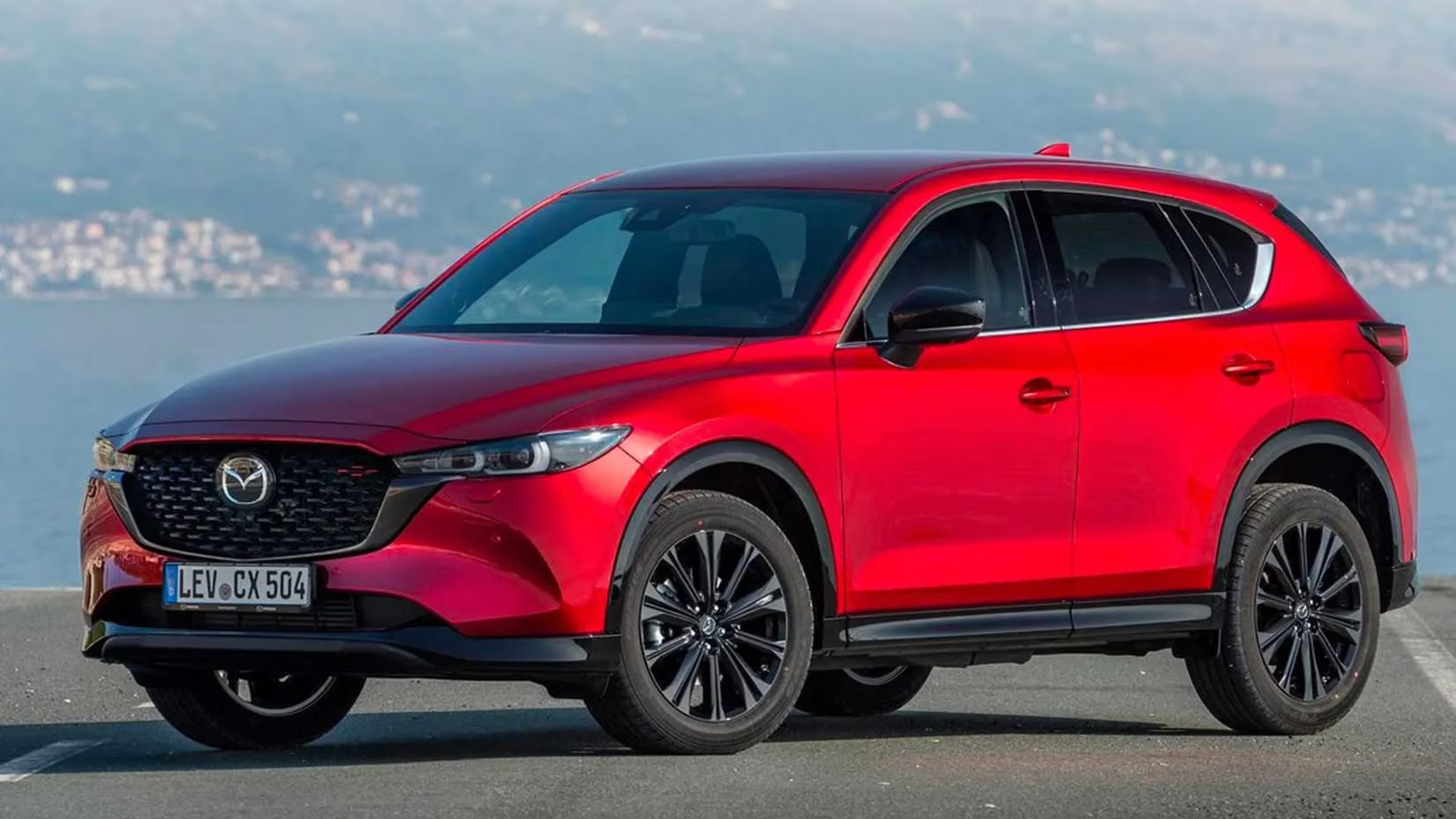
Climbing the trim ladder feels less like upselling and more like unlocking thoughtful bonuses. The 2.5 S Select ($30,100) adds leatherette seats, dual-zone climate control, and heated front seats—creature comforts that make winter mornings bearable. The 2.5 S Preferred ($31,450) sprinkles in leather upholstery, a power driver’s seat with memory, and a power liftgate for those who prefer not to wrestle with their hatch. Style hounds gravitate toward the Carbon Edition ($32,800) with its Polymetal Gray paint, black wheels, and a Bose sound system that transforms the cabin into a rolling concert hall. The 2.5 S Premium Plus ($35,400) brings ventilated front seats and a 360-degree camera, essentially turning parallel parking into a video game.
Then things get spicy. The Carbon Turbo ($37,200) and Turbo Premium ($38,000) dial up the horsepower and torque, wrapping the extra muscle in terracotta leather seats and tech like Traffic Jam Assist. At the summit sits the Turbo Signature ($40,800), flaunting Nappa leather, real wood trim, ambient lighting, and rear automatic braking. It’s the kind of near-luxury that whispers, “You deserve a raise.”
Under the hood of those turbo trims lives a 2.5-liter turbocharged four-cylinder that pumps out 256 horsepower and 310 lb-ft of torque on premium fuel. The naturally aspirated base engine makes a respectable 187 hp, but the turbo transforms the CX-5 into a zippy companion that scoots past highway dawdlers without breaking a sweat. Every model, regardless of engine, comes paired with a smooth six-speed automatic transmission and standard all-wheel drive. That means confident grip in rain, snow, or on gravel roads that look like they were designed by a vengeful goat.
What makes all of this so compelling in 2026 is that the CX-5 hasn’t had to reinvent itself every year to stay relevant. It simply executes the fundamentals of reliability, comfort, and driving enjoyment while avoiding the traps that trip up trend-chasers. Buyers looking at a used 2024 or 2025 model can rest easy knowing they are grabbing a slice of decade-defining dependability. Even the newest iterations continue to lean on the proven formula that made the CX-5 a darling of reliability surveys. In a world where some cars feel like they were designed by a committee of chaos, the Mazda CX-5 remains the sensible friend who always shows up on time—and never sends you a surprise repair bill. 🚗🔧💰
Comments