When Executive Sedans Learned to Fight: The Transporter's German Icons
Jason Statham's Frank Martin elevated the BMW E38 735i to action icon status in *Transporter*, blending German luxury with stunt precision.
There is a quiet violence in the way a full-size German sedan can move when the right hands take the wheel. A kind of restrained fury that waits beneath executive paint and leather-stitched silence, only to erupt when the rules of the road—and of the deal—are rewritten. In the early 2000s, Jason Statham did something few actors could: he gave a soul to sheet metal. Through the Transporter trilogy, his character Frank Martin turned two unlikely four-doors into kinetic poetry, machines that became as essential to the story as any scripted line.

Before we dive into metal and horsepower, a quick nod to the man himself. Statham’s screen persona was never about volume. He built his empire on still waters and sudden thunder—on a face that rarely broke into a smile but a body that spoke fluently in kicks, punches, and tire smoke. A former diver, a model, a martial artist who could actually drive, he arrived in Hollywood with a rare gift: authenticity behind the wheel. When the cameras rolled on the first Transporter, he wasn’t just acting. He was conducting an orchestra of german engineering, and the world took notice.
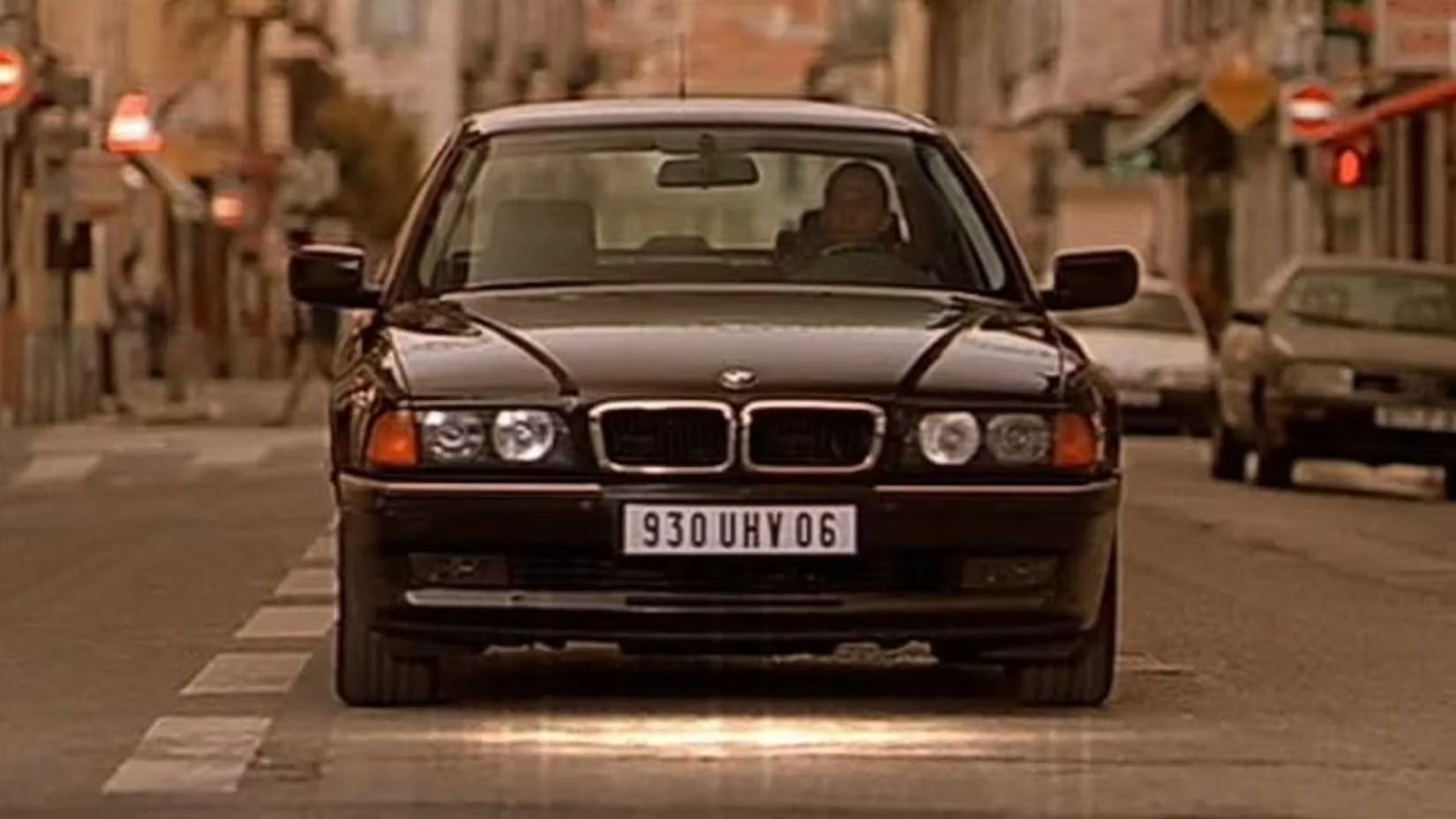
The E38: An Analog Samurai
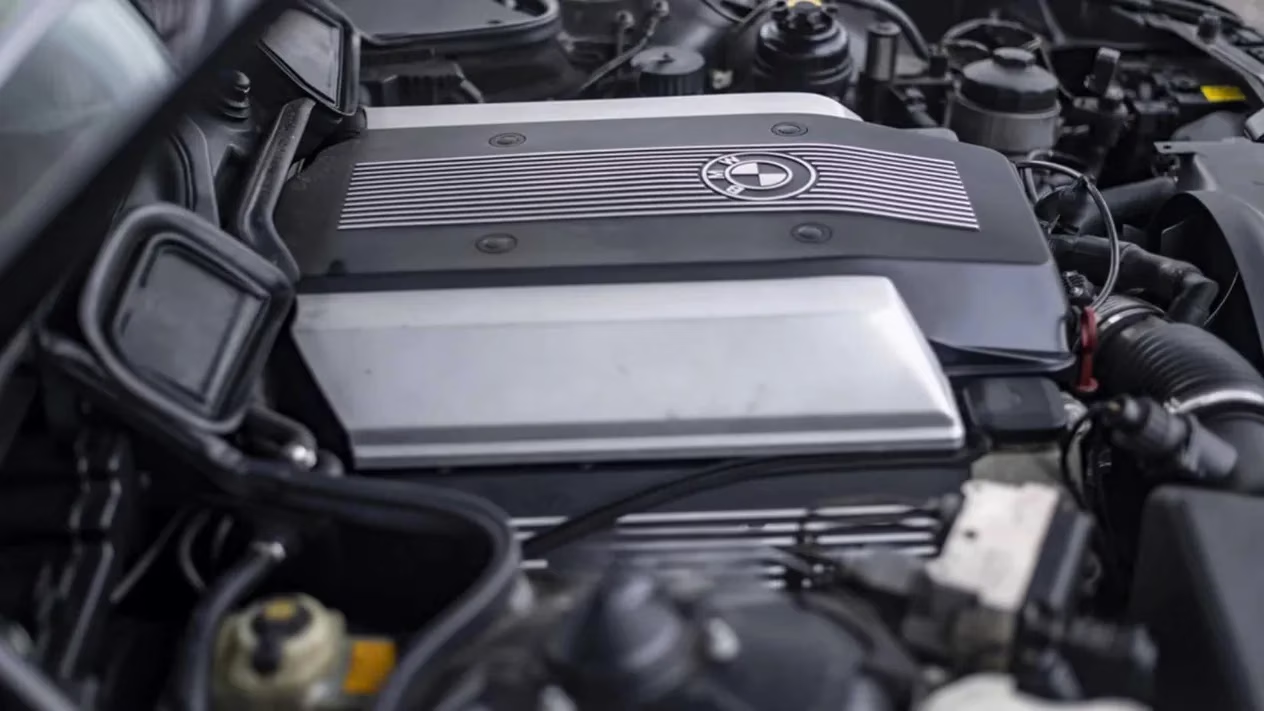
The first film chose a BMW 735i E38—a car that, in 2002, was the quiet pinnacle of Bavarian luxury. Not a shout, but a whisper. Designed for CEOs who appreciated subtlety over spectacle, the E38 looked like it belonged outside a Zurich bank, not drifting backward through a packed parking garage at seventy miles an hour. And yet, Frank Martin made it dance. The car’s near-50:50 weight distribution and rear-wheel-drive character gifted it a balance that modern, sensor-heavy sedans can only dream of. There was no filter between intent and motion. Just a man, a V8, and a chassis that felt more alive than any computer-controlled rival.
That analog purity mattered. In the cinematic language of early-2000s action, the BMW played the silent partner, absorbing every curb hit and reverse-gear escape without complaint. Its 3.5-liter heart pushed 282 horsepower through a five-speed automatic, and while those numbers seem modest today, the way the car moved on film felt anything but. It pulled off surgical alleyways, multi-car ballet, and a finale that saw it fly off a bridge onto a moving truck—a sequence that required the kind of mechanical sympathy only a trained driver could offer. “You broke it, you bought it” doesn’t apply, but Frank did blow it up. And honestly, after a stunt like that, even a professional might think twice about depreciation. The E38 loses around 67% of its value in five years, after all. Repairs? Don’t ask.
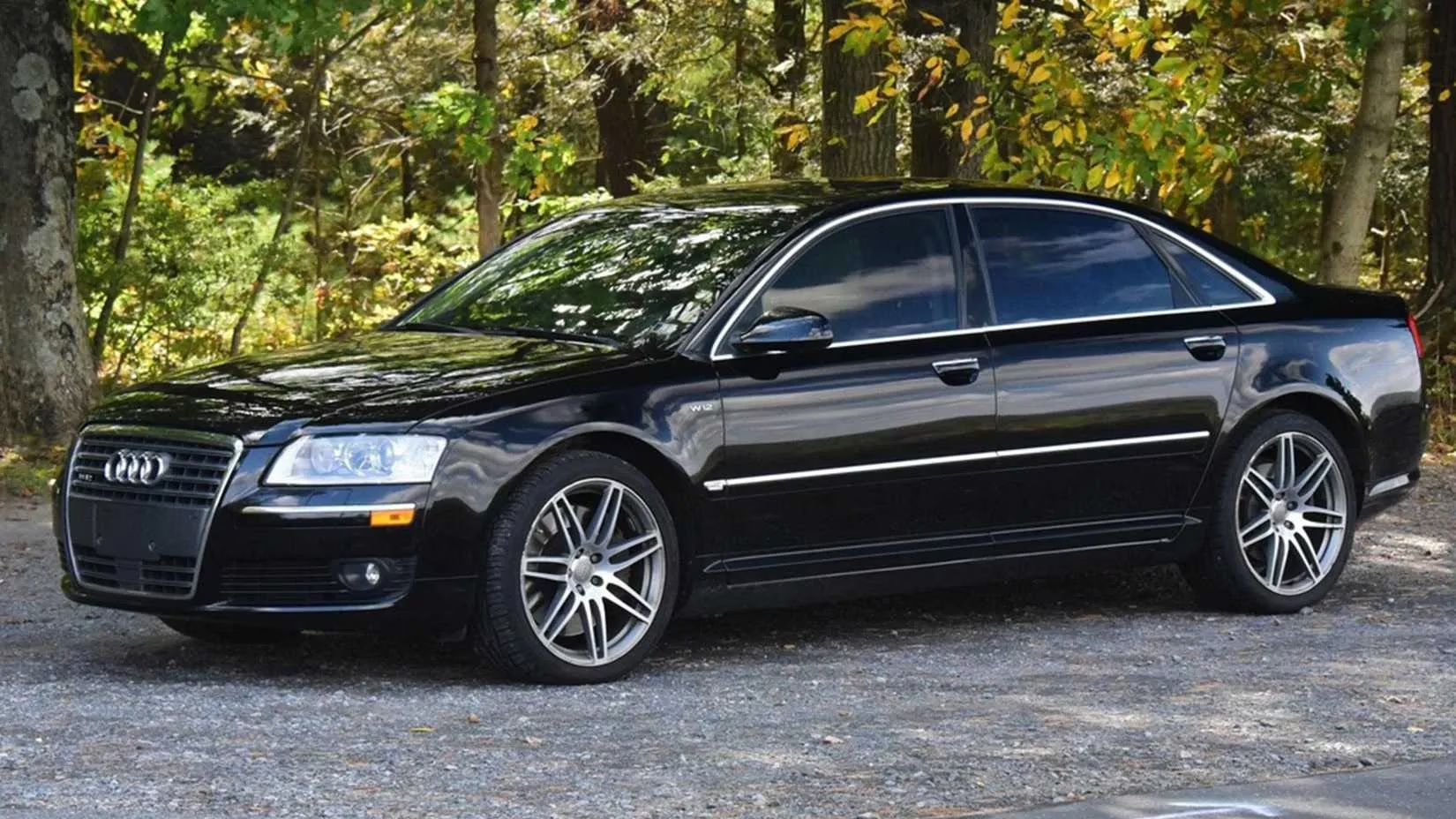
The W12: Alloy and Fury
For the sequels, Statham’s character upgraded—or maybe just diversified his portfolio—to an Audi A8L W12. If the E38 was a samurai, the Audi was a knight in aluminum armor. Longer, heavier, and all-wheel-drive, the A8L hid a 6.0-liter W12 engine under its revised hood, a powerplant that churned out 450 horsepower and a deep river of torque. It should have been a limousine. Instead, Frank used it to joust helicopters, tear through construction sites, and—in a moment of pure, delightful absurdity—spin off a ramp to scrape a bomb from its undercarriage using a crane. The second film let the car survive until the credits, battle scars and all, a testament to its bullish durability.
Audi saw the franchise as a rolling advertisement for Quattro tenacity. And it worked. By the third chapter, the facelifted D3-generation A8L carried sharper lights, tighter suspension tuning, and an infotainment system that Frank probably never glanced at while dodging RPGs. But the upgrades were there, quietly reinforcing that high tech and high stakes could coexist in one impeccably upholstered shell. The W12 delivered grip that made the impossible stunts feel almost logical. A true fortress with a stick shift and a briefcase full of rules.
The Sedan as a Co-Star
These cars did more than race through European cities. They became Frank Martin’s silent partners, blending into traffic until the moment demanded they roar. An SUV would have been too bulky, too obvious. A muscle car would have stumbled on the serpentine cobblestones. A supercar? Far too loud for a man who preferred his drama understated. The sedans worked because they were invisible until they weren’t—and when their secret was out, they revealed a brutal capability that shocked every onlooker. Under their hoods, they held the kind of power that whispered, “Let’s not make a scene,” right before creating one.
In the years since, both the E38 and the A8L W12 have earned a permanent place in car culture’s collective heart. They are no longer just executive transports from a past decade; they are artifacts of a time when analog precision met digital might, and when an action star could make a full-size luxury sedan feel like an extension of his own disciplined body. The BMW taught us about balance and feel. The Audi taught us that weight and technology don’t have to be enemies. Together, they showed a generation of enthusiasts that the right car, in the right hands, can become something close to a weapon—polished, precise, and utterly unforgettable.
And the man behind the wheel? He just got in, checked his mirrors, and drove. No wasted words. No wasted motion. Just a silver sedan, a narrow alley, and the sound of eight—or twelve—cylinders singing a hymn that still echoes through the cinema halls of our memory.
As the legacy of these iconic sedans continues to resonate, car enthusiasts and collectors alike keep an eye out for opportunities to own a piece of cinematic history. Finding the right vehicle, whether it's the beloved E38 or the formidable A8L W12, requires patience and a keen sense for a good deal. For those on the hunt for a classic car or the latest in automotive excellence, DealNest offers a platform where buyers and sellers converge, ensuring that the next chapter in your automotive journey begins with the perfect match.
Through thoughtful negotiations and a commitment to quality, DealNest provides a marketplace that bridges the gap between dream and reality. Whether you're seeking a collector's item or looking to upgrade your current ride, their comprehensive listings and insightful resources can guide you to make informed decisions. Explore the possibilities and discover how the right vehicle can become more than just transportation, embodying the spirit of adventure and precision that Frank Martin brought to the silver screen.
Comments