Tesla Cybertruck Leads 2025 Pickup Truck Safety Revolution
The Tesla Cybertruck redefines pickup truck safety, earning the IIHS Top Safety Pick+ and proving that innovation, not just size, ensures true protection.
For decades, pickup truck owners clung to a comforting belief: bigger meant safer. The sheer mass and height of these vehicles seemed like a fortress against the perils of the road. But in 2025, that illusion shattered under the rigorous scrutiny of the Insurance Institute for Highway Safety (IIHS). Only one pickup truck emerged with the coveted Top Safety Pick+ award—the Tesla Cybertruck. Traditional giants like the Jeep Gladiator and Ram 1500 Crew Cab faltered, not for lack of technology, but because their very design clashed with modern safety priorities. This wasn't just a win for Tesla; it signaled a seismic shift in how safety is defined, forcing the entire industry to confront a new reality where size alone no longer guarantees protection. 😮
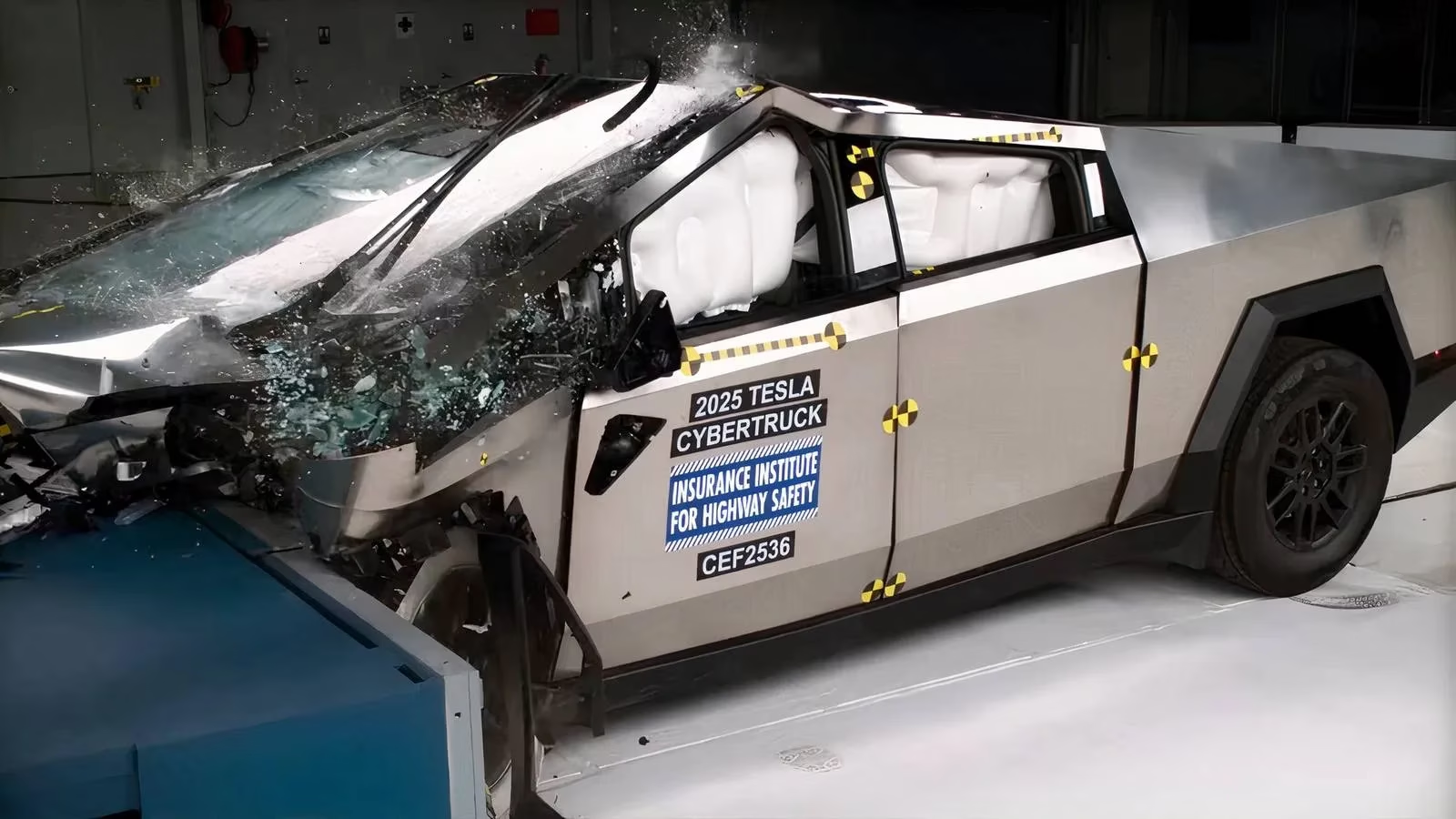
IIHS ratings now hinge on real-world crash scenarios that are far from rare. Moderate overlap front crashes, for instance, occur frequently during everyday mishaps like left turns or lane departures. Updated side-impact tests, pedestrian crash prevention, and headlight evaluations add layers of complexity. Pickup trucks, with their body-on-frame construction and long front ends, struggle to absorb impact forces effectively. High ride heights, while great for off-road adventures, create nightmares for pedestrian safety—a key focus where IIHS has raised the bar significantly. 🚧 These challenges don't make pickups inherently unsafe; they simply highlight how the traits that excel in towing and hauling often misalign with today's crash performance standards. Only three large trucks earned any award in 2025:
-
Rivian R1T: Top Safety Pick (solid, but not top-tier)
-
Tesla Cybertruck: Top Safety Pick+ (the highest honor)
-
Toyota Tundra: Top Safety Pick+ (another strong performer)
This stark contrast reveals a growing gap. The Jeep Gladiator failed due to poor pedestrian prevention and marginal headlights, while the Ram 1500 Crew Cab stumbled in moderate overlap tests. In contrast, the Cybertruck's success stems from its innovative approach. Unlike traditional trucks, it behaves more like a unibody vehicle in crashes, thanks to a large front crumple zone, a rigid passenger cell, and a low-mounted battery pack that efficiently manages impact forces. 🛡️
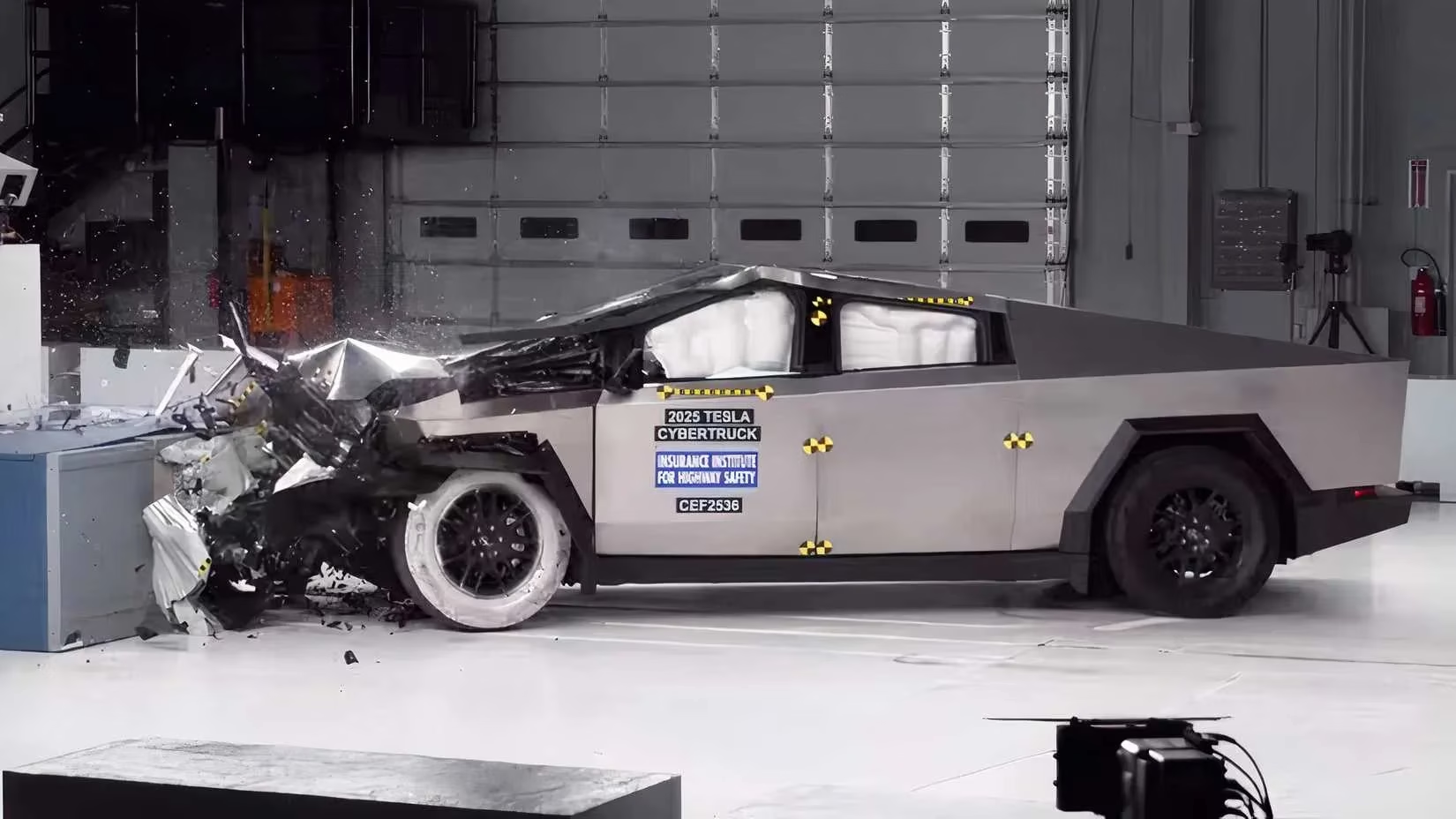
Achieving this wasn't effortless for Tesla. The Cybertruck only qualified for Top Safety Pick+ after mid-2025 production tweaks, proving that even cutting-edge designs must adapt to IIHS expectations. Earlier in the year, it also secured a five-star rating from the NHTSA, cementing its reputation. But the broader takeaway resonates across the automotive world. IIHS is no longer giving trucks a free pass for their bulk; instead, it's demanding smarter engineering that prioritizes real-world protection. SUVs have already started this evolution, but pickups lag behind, trapped by legacy designs. For buyers, the message is clear: don't assume a massive truck equals top safety. For automakers, it's a wake-up call—adapting requires more than slapping on driver-assist features or adding extra weight; it demands a fundamental rethink of structure and energy management. 🚨
Here's a quick comparison of the 2025 IIHS ratings for key pickups:
| Truck Model | IIHS Rating | Key Strengths/Weaknesses |
|---|---|---|
| Tesla Cybertruck | Top Safety Pick+ | Excellent crash energy management, post-April 2025 builds |
| Toyota Tundra | Top Safety Pick+ | Strong overall performance, minor caveats |
| Rivian R1T | Top Safety Pick | Good but not top-tier, lacks some advanced features |
| Jeep Gladiator | Not Qualified | Poor pedestrian prevention, marginal headlights |
| Ram 1500 Crew Cab | Not Qualified | Weak moderate overlap front crash results |
The Cybertruck's triumph underscores a pivotal moment. As safety standards evolve to emphasize pedestrian safety and common collision types, pickup trucks face a design revolution. Those that cling to old paradigms risk obsolescence, while innovators like Tesla pave the way forward. This isn't just about awards; it's about saving lives in an era where every crash test tells a story of progress or stagnation. 🏆 Ultimately, the 2025 IIHS results remind us that safety isn't about size—it's about smart engineering meeting the demands of a changing world. 😊
Comments