Subaru Crosstrek: My 2026 Benchmark for Reliable Adventure
Subaru Crosstrek reliability shines with top J.D. Power scores, refined boxer engines, and durable CVT—making it a dependable compact SUV.
As I write this in 2026, I still remember when Subaru was the brand people praised for quirky engineering and tolerated for head gasket worries. Today, my mental map of dependability has Subaru near the top, and the model I keep circling back to is the Crosstrek. Consumer Reports has ranked Subaru as the most reliable car brand in the world in recent data, and it has also topped its overall brand rankings when road test, reliability, and owner satisfaction are combined. That is not a fluke. It is the result of a brand that, instead of reinventing itself every few years, has refined its engines, transmissions, and chassis with the patience of a coral reef: small deposits, repeated over time, until a structure appears.
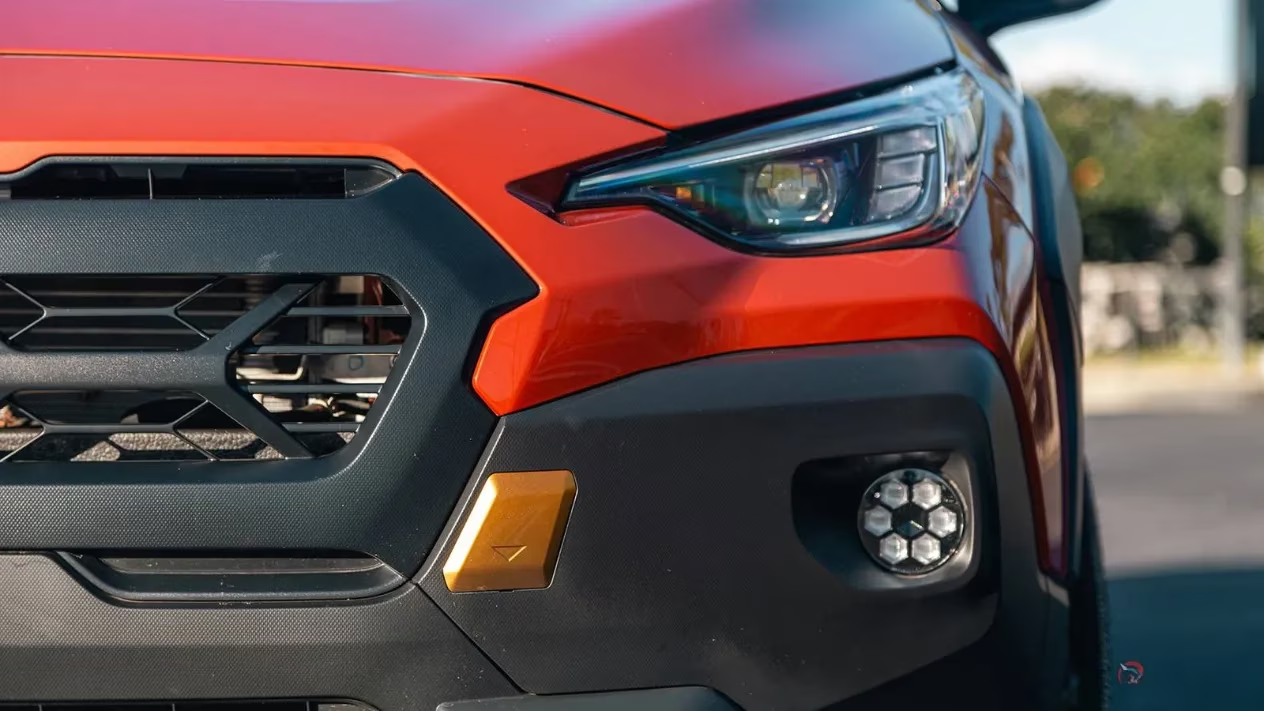
In 2025, J.D. Power reliability scores for Subaru's lineup were strong across the board. The Crosstrek and Forester each scored 83/100, the Legacy and Impreza scored 82/100, the Outback scored 80/100, and the BRZ scored 76/100. The WRX was not rated in that snapshot. But the Crosstrek stands out to me because it pairs those scores with a personality that is easy to live with. It began life in 2013 as the XV, a lifted Impreza hatchback with Outback Sport DNA, and it adopted the Crosstrek name in 2016. It shares its platform with the Impreza, but Subaru gave it more ground clearance, better tires, off-road-oriented suspension, and the visual language of a weekend escape vehicle.
| Model | J.D. Power reliability score |
|---|---|
| Crosstrek | 83/100 |
| Forester | 83/100 |
| Legacy | 82/100 |
| Impreza | 82/100 |
| Outback | 80/100 |
| BRZ | 76/100 |
| WRX | N/A |
🛠️ The mechanical story is just as compelling. Subaru's modern engines have largely put the old head gasket reputation in the rearview mirror. The CVT, once a weak point, is now chain-driven and built in-house. For 2024 and 2025, the Crosstrek gained a redesigned chassis with more weld points, McPherson struts up front, and a double wishbone rear suspension. The 2.5-liter boxer arrived in 2021 to fix the older model's sluggish acceleration, and the CVT now uses an aluminum pan instead of plastic. It connects to a cast iron differential for strength and longevity, and it is accessible from underneath for easier maintenance. The FB20 and FB25 naturally aspirated engines are simple to work on, with straightforward cooling and direct fuel injection. There is no forced induction or exotic complexity to shorten their lives. Some oil leaks are still possible, according to mechanics, but the days of widespread head gasket failure are gone.
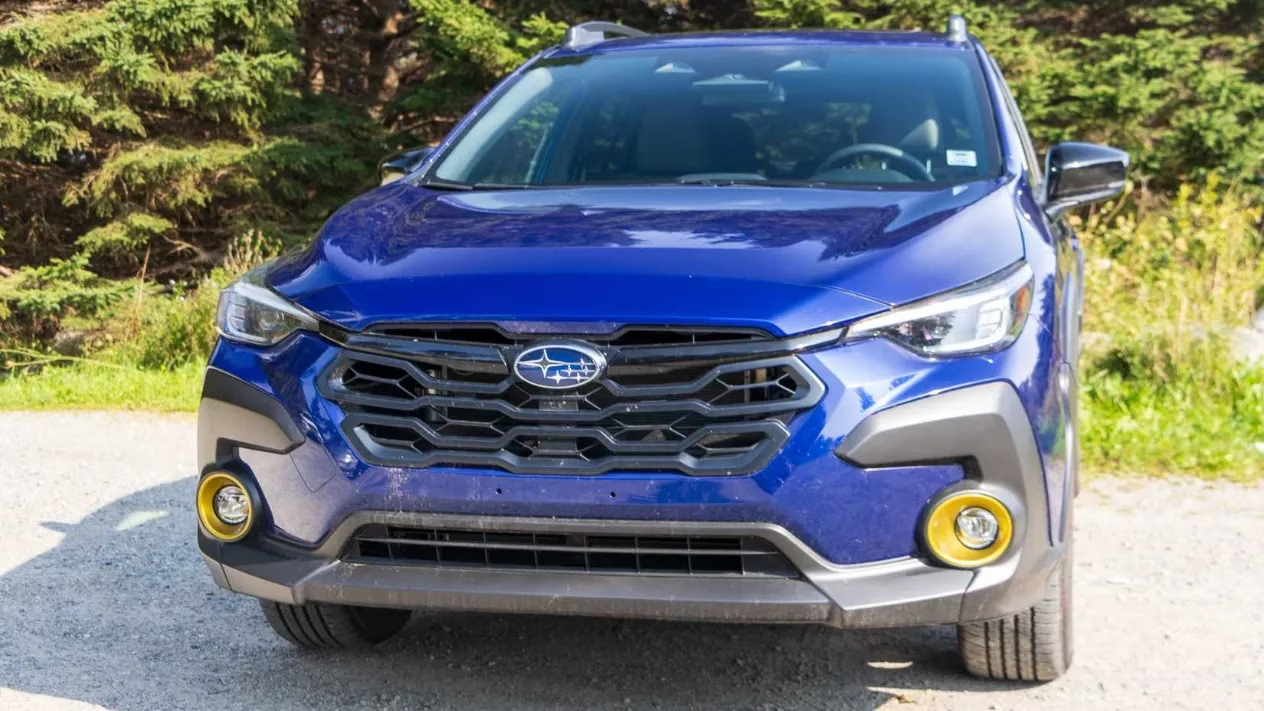
🧰 What convinces me most is not a spec sheet. It is the owner record. On Edmunds, the 2025 Crosstrek has an average rating of 4.3 out of 5 stars from 62 consumer reviews, with 71 percent of owners giving it a full five stars. One owner of a 2.5-liter Crosstrek Limited wrote, 'The ride is so much smoother and quieter... I have had BMWs, Fords, and Nissans and my Crosstreks have always come out on top.' Another said, 'The 2.0 L engine is sufficiently powerful and provides plenty of pull and acceleration. No complaints whatsoever.' A third simply concluded, 'This car has my highest recommendation.' On Subaru forums, the same tone appears: 'The first thing anyone notices in my 24 Sport is just how quiet it is, especially on the highway.'
RepairPal, which can be harsh but fair, gives the 2025 Crosstrek a 4.5 out of 5.0 reliability rating and ranks it first out of 26 compact SUVs. Its average annual repair cost is $492, far below the compact SUV average. CarEdge estimates $509 per year for repairs and maintenance, which means about $2,548 over five years. That is the kind of math that makes a vehicle feel like a pocketknife that has quietly replaced half the tools in my garage. The XV that came before it also built a stellar reputation. One owner of a 2015 XV reported reaching 376,000 miles. The used market is full of Crosstreks and XVs with more than 130,000 miles, which tells me high mileage is not a gamble here.
🏔️ Subaru's Symmetrical AWD is standard on every model except the BRZ, and it remains one of the best all-weather systems in the business. It is a true, permanent AWD setup that distributes power symmetrically when wheels slip. It works like a metronome for bad weather: steady, predictable, and almost boring in the best way. The Crosstrek also offers Dual-function X-MODE with Hill Descent Control and a 360-degree Surround View Camera. The Wilderness trim, new for 2024, lifts the SUV by 0.6 inches for 9.3 inches of total ground clearance, adds Yokohama off-road tires, and tunes the suspension for rougher terrain. Approach, departure, and breakover angles improve to 20, 33, and 21.1 degrees. With either the 2.0-liter or 2.5-liter flat-four, both naturally aspirated and paired with standard AWD, the Crosstrek returns 29 combined MPG. The 182-hp 2.5-liter can hit 60 mph in 7.9 seconds, which is not drag-strip fast, but the Crosstrek weighs only about 3,300 pounds, so it feels more than adequate.
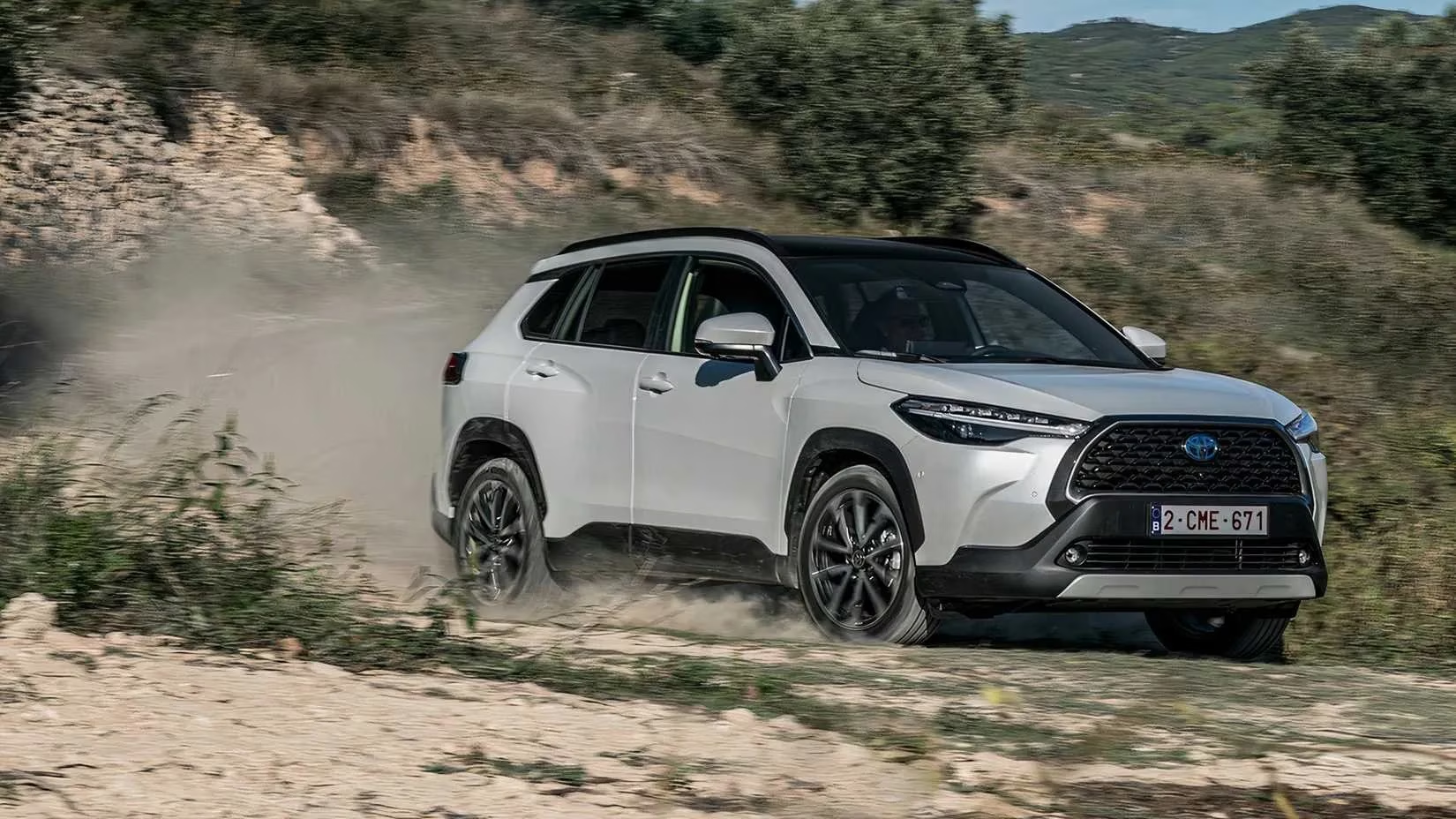
Competition in 2025 and 2026 is fierce. The Toyota Corolla Cross scores 79/100, the Honda HR-V 82/100, the Mazda CX-30 76/100, and the Jeep Compass 81/100. Toyota and Lexus still build some of the most reliable cars on earth, but Toyota has had recent stumbles, including faulty automatic gearboxes in 2024 Tacomas and engine failures in the GR86's FA24 that led to a class action lawsuit. Subaru has also benefited from its partnership with Toyota, which has helped sharpen build quality. Yet none of the rivals completely replaces the Crosstrek's value proposition: it is the only one in this group with a boxer engine, standard AWD even in the lowest trim, genuine off-road credentials, and refined on-road manners.
After years of watching Subaru climb the reliability ladder, I no longer see the Crosstrek as a niche oddball. I see it as the benchmark. It is not just made for adventure. It is built to endure it.
Comments