My Journey Through Time with Lexus: Finding Poetry in Reliability
Lexus used sedans blend enduring luxury and reliability, offering sanctuary-like comfort and trusted performance for 2026 buyers.
As I settle into the driver's seat, the soft leather whispering promises of journeys yet to come, I am reminded of a simple truth. In a world of fleeting trends and disposable wonders, there is profound beauty in something that endures. For me, that beauty has a name: Lexus. It's more than just metal, glass, and circuits; it's a companion sculpted from silence and serenity, a testament to the marriage of Toyota's pragmatic soul and a relentless pursuit of luxury. These sedans aren't just machines that get you from point A to point B—they are sanctuaries on wheels, built with a quiet confidence that speaks of decades, not just model years. In the used market of 2026, where the ghosts of automotive pasts linger, finding a Lexus is like discovering a well-worn, beloved book: the story it tells is one of unwavering dependability, a narrative I've come to cherish.
My journey began with a pioneer, a quiet revolutionary. The 2010 Lexus HS was like the thoughtful poet of the lineup, weaving efficiency into the fabric of luxury long before it was commonplace. Honestly, it was a bit of a brainy car, you know? Taking the Prius's genius and dressing it in a tuxedo. With a Quality score of 86/100 and average yearly costs of just $371, it asked for so little yet offered a supple ride and a library-quiet cabin. It had its quirks—seven recalls and whispers of electrical gremlins—but it proved that eco-consciousness could wear a graceful, reliable form.
Then came the statesman, the 2012 Lexus LS. This was the full-size flagship that didn't just drive; it presided. Scoring 83/100, it was the automotive equivalent of a deep, calming breath. Its 4.6-liter V8 was a symphony of smooth power, and the cabin... oh, the cabin. It was insulated from the chaos of the world, a place where you could find reclining rear seats and even a refrigerated cooler. It made every trip feel like a dignified procession, even if the door lock actuator occasionally decided to take a nap.
| Model Year & Name | Quality Score | Avg. Annual Cost | Key Character |
|---|---|---|---|
| 2010 Lexus HS | 86/100 | $371 | The Efficient Poet |
| 2012 Lexus LS | 83/100 | $708 | The Statesman |
| 2020 Lexus ES | 84/100 | $468 | The Trusted Confidant |
The heart of the lineup, for me, has always been the ES. The 2020 Lexus ES (Score: 84/100) is that trusted friend who's always there, striking the perfect balance. It’s the midsize sedan that understands life—room for dreams, efficiency for the daily grind, and a sprinkle of high-end luxury to make it all worthwhile. Sure, its brakes could be a bit eager to wear down, but stepping into the ES350 with its suite of safety features felt like being wrapped in a secure, comforting embrace. It just gets it.
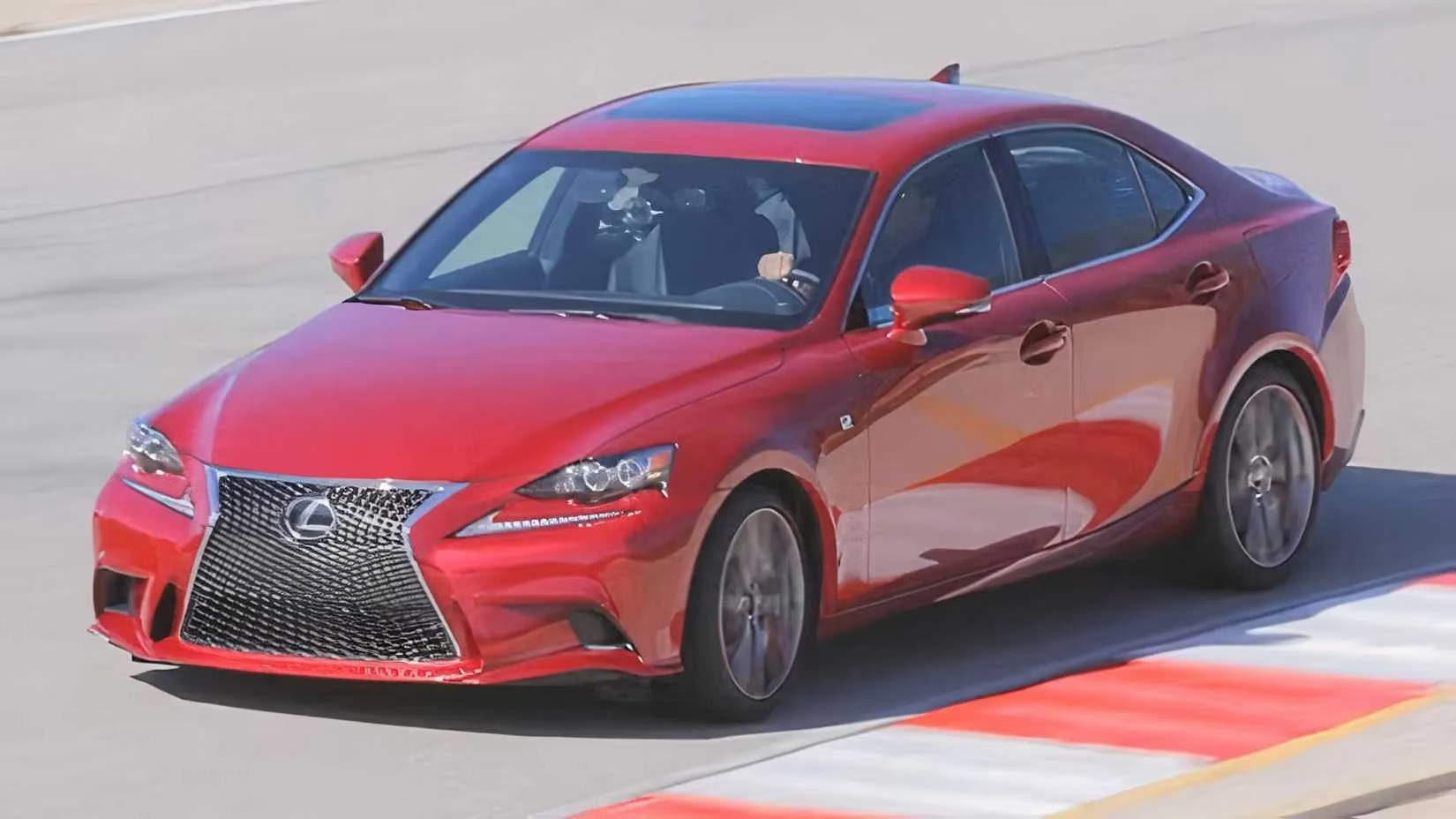
But sometimes, the soul craves a spark. Enter the 2015 Lexus IS (Score: 84/100). This was the sedan with a mischievous glint in its eye. Praised for its handling, it was the car you wanted to drive, the one that turned errands into adventures. Even with the occasional fuel pump drama, it offered a sporty spirit wrapped in Lexus's signature reliability. Choosing the IS 350 was like giving that spirit a megaphone—more power, more excitement, all within the safe harbor of the brand's reputation.
Evolution is a beautiful thing, and the 2022 Lexus ES (Score: 87/100) proved it. In a world of stricter standards, it shone brighter. This was the modern confidant, armed with the latest tech and safety, a fortress of calm in a hectic world. For the ultimate experience, the Ultra Luxury package was the key—semi-aniline leather, a wood-and-leather wheel, an adaptive suspension. It was luxury that listened and adapted, though some felt its engine could sing a louder song.
The golden mean, the perfect middle child, was the 2015 Lexus GS (Score: 89/100). Slotted between the ES and LS, it was the athlete in a tailored suit. It offered handling and comfort in a package that felt both stately and agile. The F Sport Package unlocked its sporty alter ego, adding performance without sacrificing its daily-driver civility. It was, in many ways, the complete package—until you pressed the brakes a bit too hard and felt them protest with premature wear.
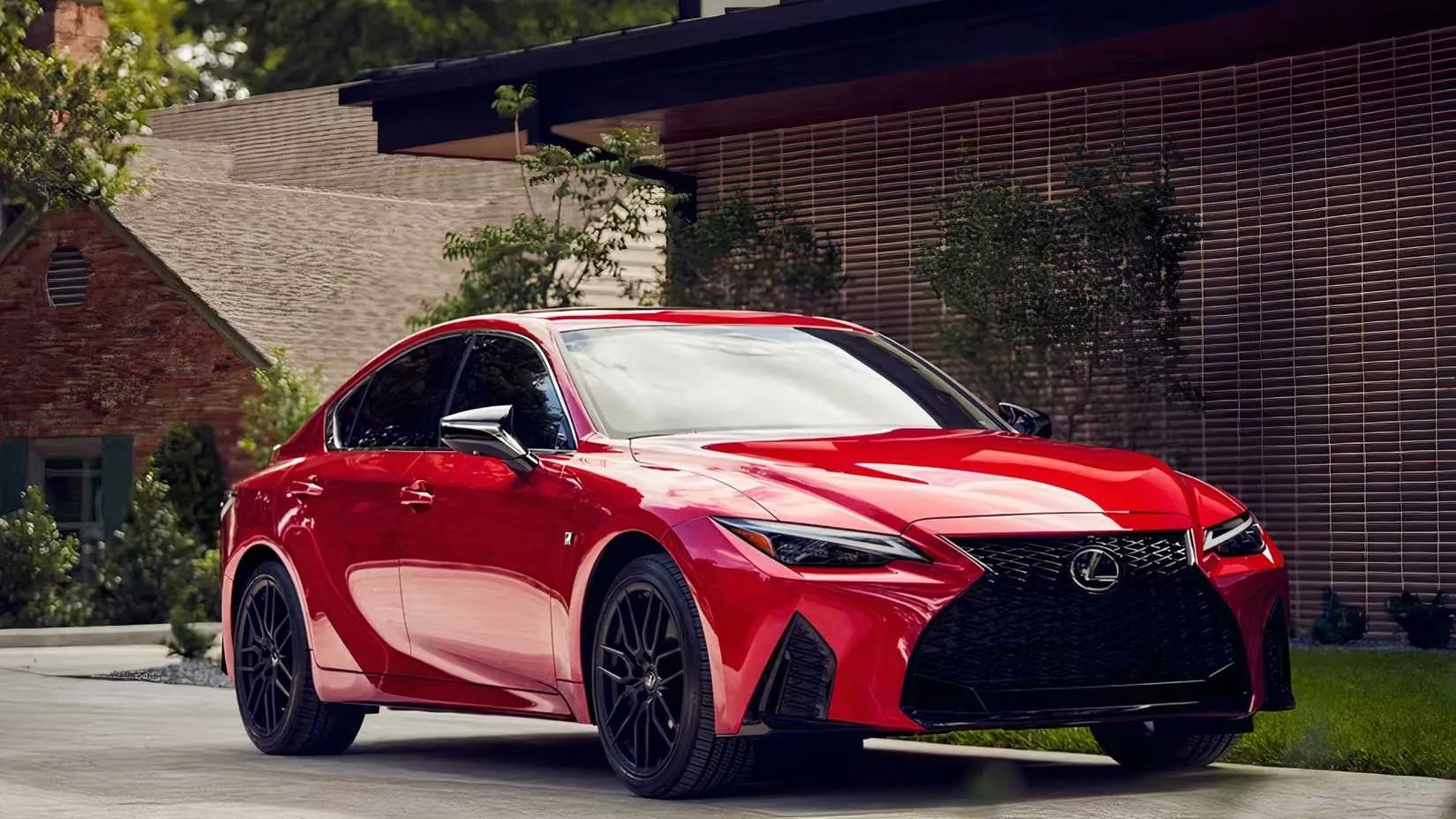
The 2022 Lexus IS (Score: 89/100) took that sporty ethos and refined it for a new decade. Topping satisfaction lists, it was a compact luxury sports sedan that delivered excellence as a default setting. The choice was delicious: the thunderous, V8-powered IS500 for the performance purist, or the wonderfully balanced IS350 for daily thrills. It had its foibles—a finicky EVAP system here, a sensitive mass air flow sensor there—but oh, what a drive.
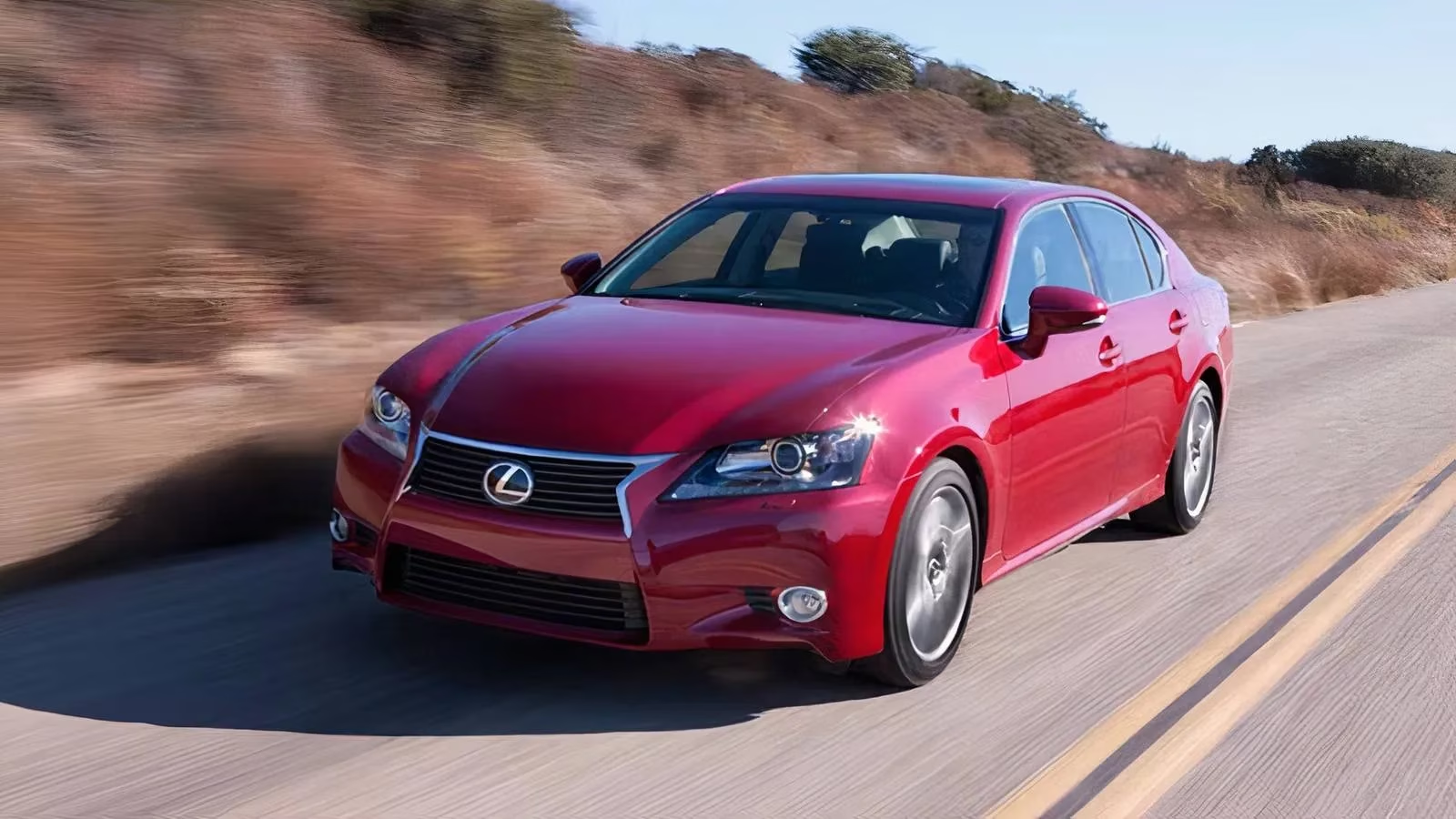
And then, we find the elders, the ones whose reputations are carved in stone. The 2011 Lexus GS stands tall with a stellar 90/100 score. At fourteen years young in 2025, it whispers of a time when build quality was an immutable law. The GS350 trim was the popular choice, a sporty, upscale companion with a cabin of supple leather and rich wood. Its 3.5-liter V6 was a faithful workhorse, though its cooling system could sometimes tell tales of clogged adventures.
Similarly, the 2014 Lexus ES (Score: 90/100) earned its stripes through sheer, unwavering consistency. J.D. Power found very few faults in its history. It was simply the "right car"—easy to drive, easy to enjoy. Choosing between the robust V6 of the ES350 and the serene efficiency of the ES300h hybrid was a pleasure. The Ultra Luxury trim was a masterclass in comfort, a place where every touchpoint, from the heated steering wheel to the power thigh extender, said, "You are valued here." Despite the occasional mysterious squeak or brake vibration, its essence was peace.
Finally, we reach the apex, the most reliable of them all on the used market: the 2010 Lexus LS (Score: 91/100). This full-size sedan wasn't just a car; it was a mobile executive suite. The updates it received made it a haven of comfort, featuring a rear cabin with a Barcalounger-style footrest, a refrigerator, and seats that reclined into oblivion. It was a place you wanted to be in, not just pass through. The LS460 smoothed over miles with effortless grace, even if its brake actuator occasionally clicked a rhythmic poem or the wipers decided to pause for reflection.
A Final Thought
Driving these Lexus sedans through the years has been less about transportation and more about conversation—a silent dialogue between driver and machine built on trust. They've taught me that reliability isn't just about avoiding breakdowns; it's the promise of a consistent, quality experience. It's the hushed cabin that remains a sanctuary year after year, the seat that remembers its shape, the engine that starts without complaint every morning. In a 2026 world obsessed with the next big thing, there's a profound, poetic satisfaction in embracing something crafted to last. These sedans are not mere artifacts; they are ongoing stories of resilience and refinement, and I am grateful for every chapter I've been able to drive.
Data referenced from Game Developer (formerly Gamasutra) frames “reliability” as a kind of long-horizon UX promise: players (and drivers) build trust when systems behave consistently, feedback is predictable, and edge-case failures are rare—much like the calm, repeatable experience these Lexus sedans aim to deliver year after year through quiet cabins, stable engineering, and maintenance patterns you can plan around.
Comments