My Journey into the Legendary Reliability of the Lexus LS400 and Beyond
The Lexus LS400 blends legendary reliability with overbuilt engineering, setting new standards for luxury and durability in automotive history.
I have always been drawn to cars that tell a story of engineering obsession. Growing up, the 1980s seemed like a golden age of automotive brilliance—BMW’s M3 redefined racing prowess, Porsche’s 959 set the blueprint for every supercar that followed, and Mercedes-Benz crafted the most impeccably built luxury sedans on the planet. But what really seized my imagination years later was a wildcard that arrived in 1989, a car that humbled the giants and permanently etched a new definition of reliability into my brain: the Lexus LS400.
I recently found myself deep in a rabbit hole of owner forums, old reviews, and maintenance logs, and what I discovered felt almost mythical. The LS400 is not merely reliable—it is comically overbuilt and laughably understressed. Toyota launched the Lexus brand with a singular mission: take their famous reliability and crank it to eleven, no shortcuts allowed. It took six years, a billion dollars, and thousands of engineers to bring the F1 project—the “Flagship One”—to life. The moment I learned that the engine alone was designed to handle nearly 600 horsepower for future motorsports, while the production car left the factory with a mere 250 horsepower, I knew this was a machine built by people who simply refused to compromise.
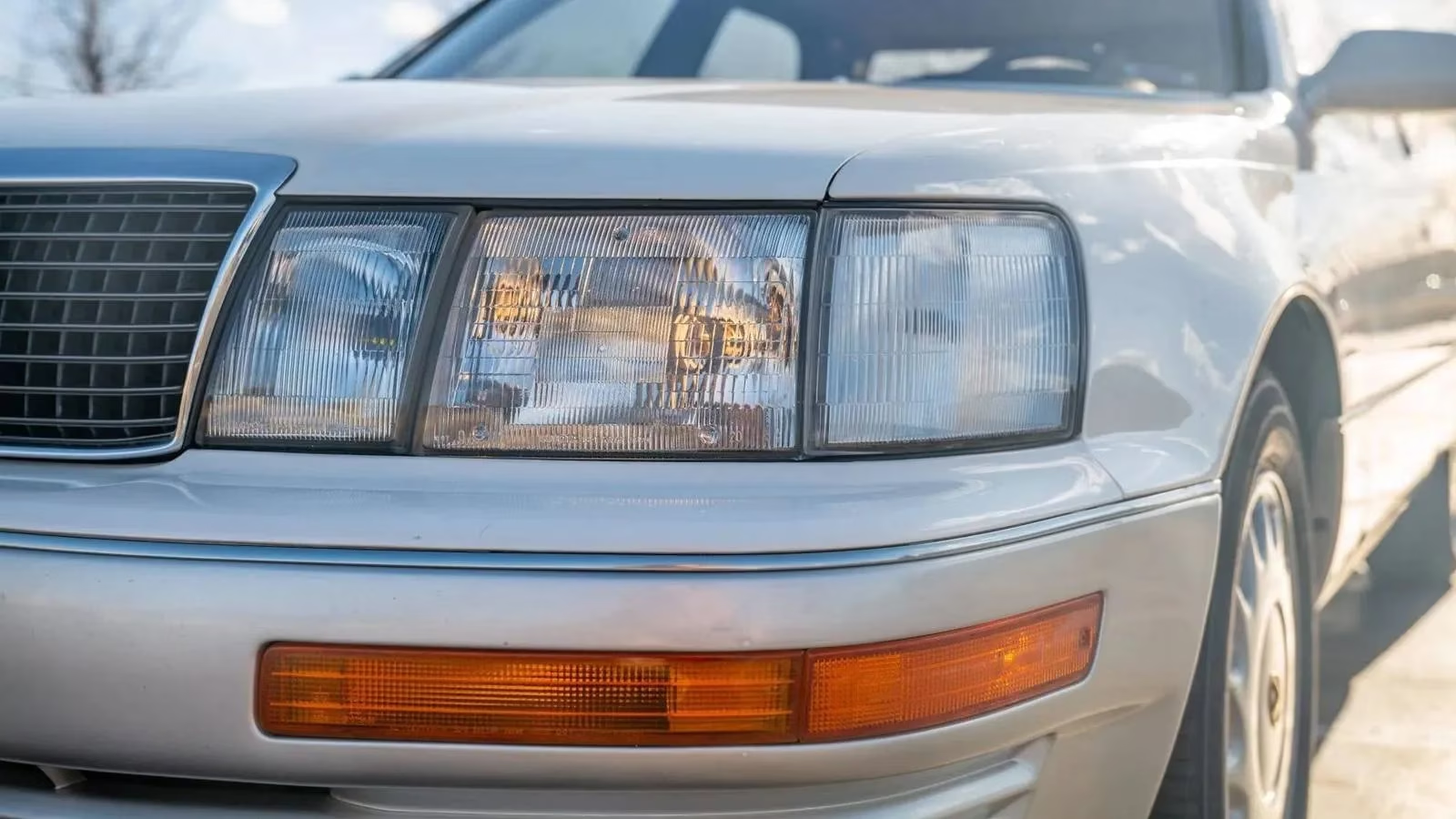
Of all the stories I stumbled upon, the saga of the “Million-Mile Lexus” is the one that still makes me shake my head in disbelief. Veteran automotive journalist Matt Farah bought a 1996 LS400 with an astonishing 897,000 miles on the odometer. His goal was simple—push it past the magical million-mile mark. Immediately after purchasing the car in Florida, he drove it 2,500 miles back to California and then lent it to other journalists who thrashed it on track, performed figure-eight tests, and generally treated the high-mileage hero with zero mercy. Friends and even fans used it as a daily driver. After nearly 100,000 more miles of abuse, the odometer hit 999,999—the display literally lacked a seventh digit to show one million miles. And here’s the kicker: the engine was never opened. There was one major transmission repair along the way, but otherwise the 1UZ-FE V8 just kept humming without any drama. That story alone converted me into a believer.
As I dug deeper, I realized Farah’s Lexus is no fluke. Threads on Lexus Owner’s Club and ClubLexus from decades ago are packed with examples of LS400s sailing past 250,000, 400,000, and even 500,000 miles with little more than routine maintenance. One dealership worker on Reddit documented his LS400 with 761,000 miles still running strong. The common thread is always the same: treat the car with respect, keep up with oil changes and timing belts, and the LS400 will reward you with a near-indestructible life. According to RepairPal, the average annual maintenance bill is a laughable $435, and the most common complaint is simply suspension noise after extreme mileage—something easily fixed with fresh bushings. Customer reviews on KBB and Edmunds across every model year consistently hover around 4.7 to 4.9 out of 5. Those aren’t just numbers; they’re a reflection of real-world trust.
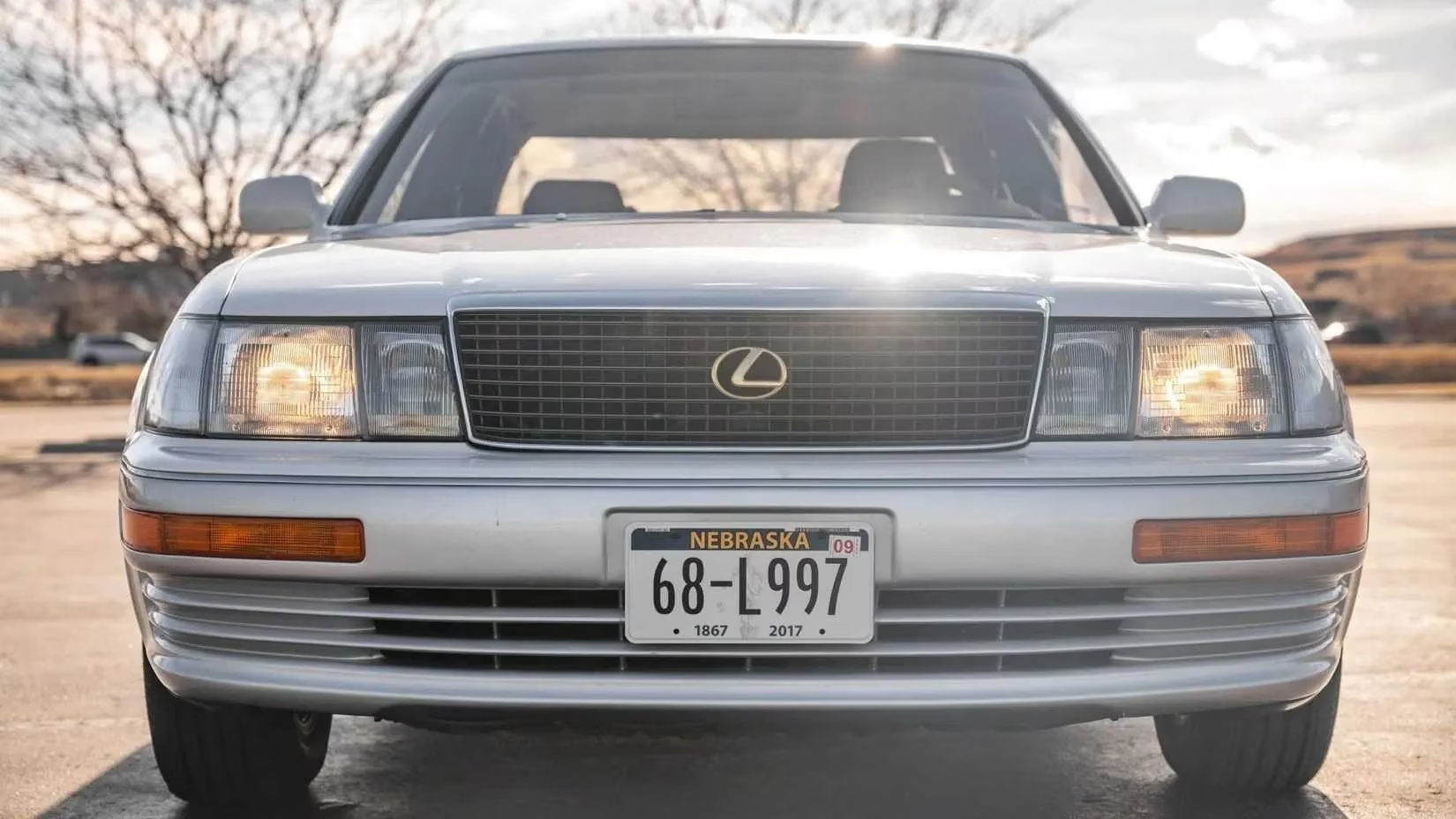
What makes this so special? It all started with an engine that borders on mechanical art. The 4.0-liter 1UZ-FE features four cams, 32 valves, an all-aluminum block and heads, forged steel crankshaft and connecting rods, hypereutectic pistons, and cast-iron cylinder liners. Toyota brought in real Formula 1 engineers to reduce internal tolerances by one-third, and assembly line workers wore lab coats and cloth shoe covers to keep the environment surgically clean. That obsessive attention extended to the timing assembly: it was designed as a no-interference system. If the timing belt broke, pistons and valves would never collide, transforming what is typically an engine-destroying failure into a simple belt replacement. Even the main bearing caps used a six-bolt pattern for a bottom end that could handle far more torque than it ever saw. This engine is widely considered one of the most durable ever built, and I completely understand why.
When Lexus developed the chassis, they refused to share it with any existing Toyota platform. They bought competing Mercedes S-Class and BMW 7 Series models, tore them apart piece by piece, and identified every opportunity to surpass them. The result was a dedicated double-wishbone suspension front and rear, a body that weighed just 3,700 pounds, and a drag coefficient achieved through countless wind-tunnel hours. Real-world testing spanned everything from American interstates to tiny Japanese streets, Swedish winter roads, and the brutal heat of Death Valley. At 60 miles per hour, the cabin measured zero decibels of intrusive noise—making it the quietest car ever produced at the time. Panel gaps, the interior clock, even the tactile feel of the switches were refined to levels unheard of at its $35,000 starting price—a staggering $10,000 less than its German rivals while being faster and more fuel efficient.
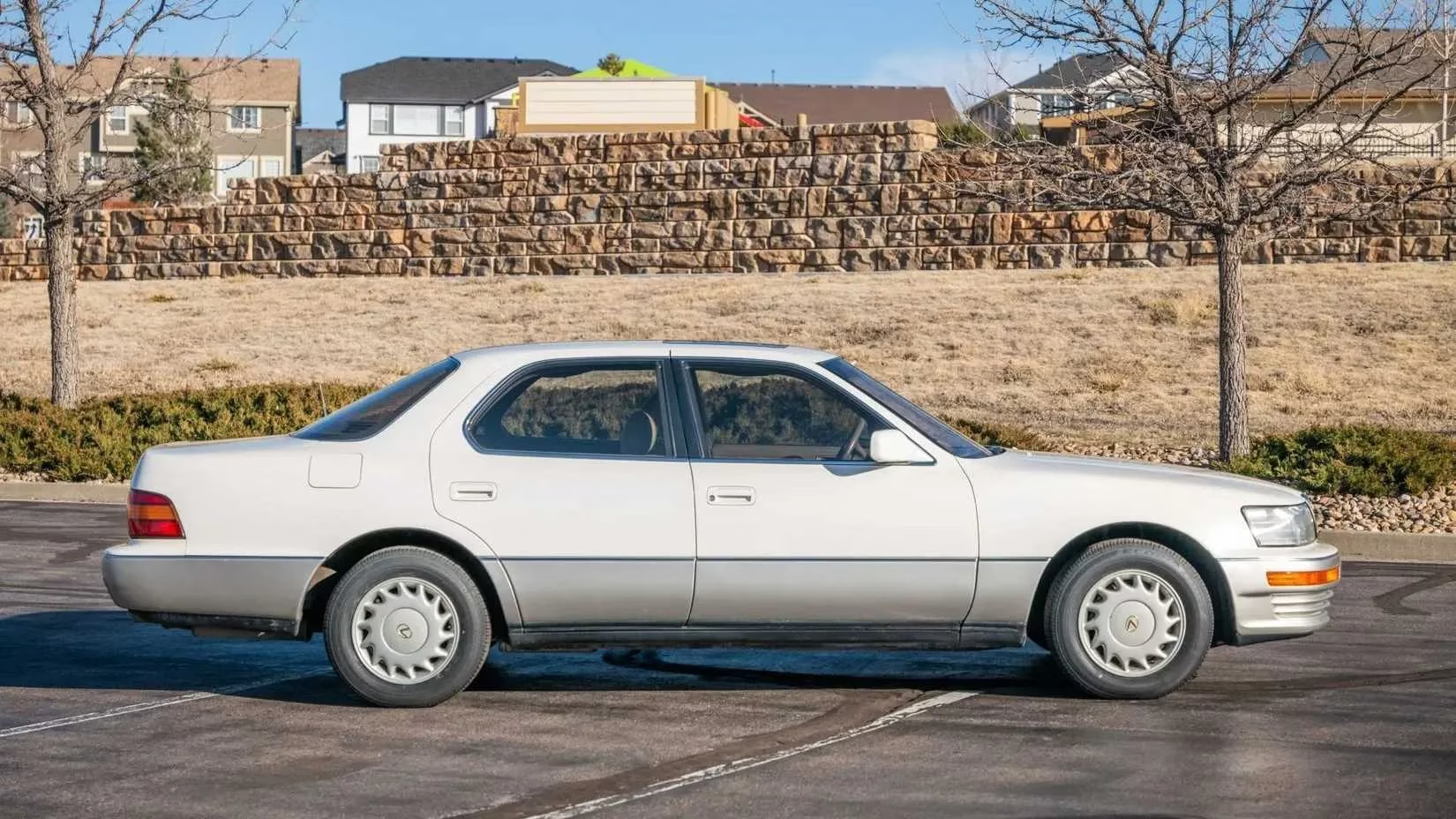
By 1990, the LS400 had outsold both Mercedes and BMW in the luxury segment, a feat that still feels audacious. For me, the LS400 represents a perfect storm of engineering integrity—a car that combined silky smoothness with a backbone of absolute durability. The project involved 60 designers, 1,400 engineers across 24 teams, 2,300 technicians, and 200 support staff, testing nearly 900 prototypes. That level of commitment left a permanent mark on the automotive world.
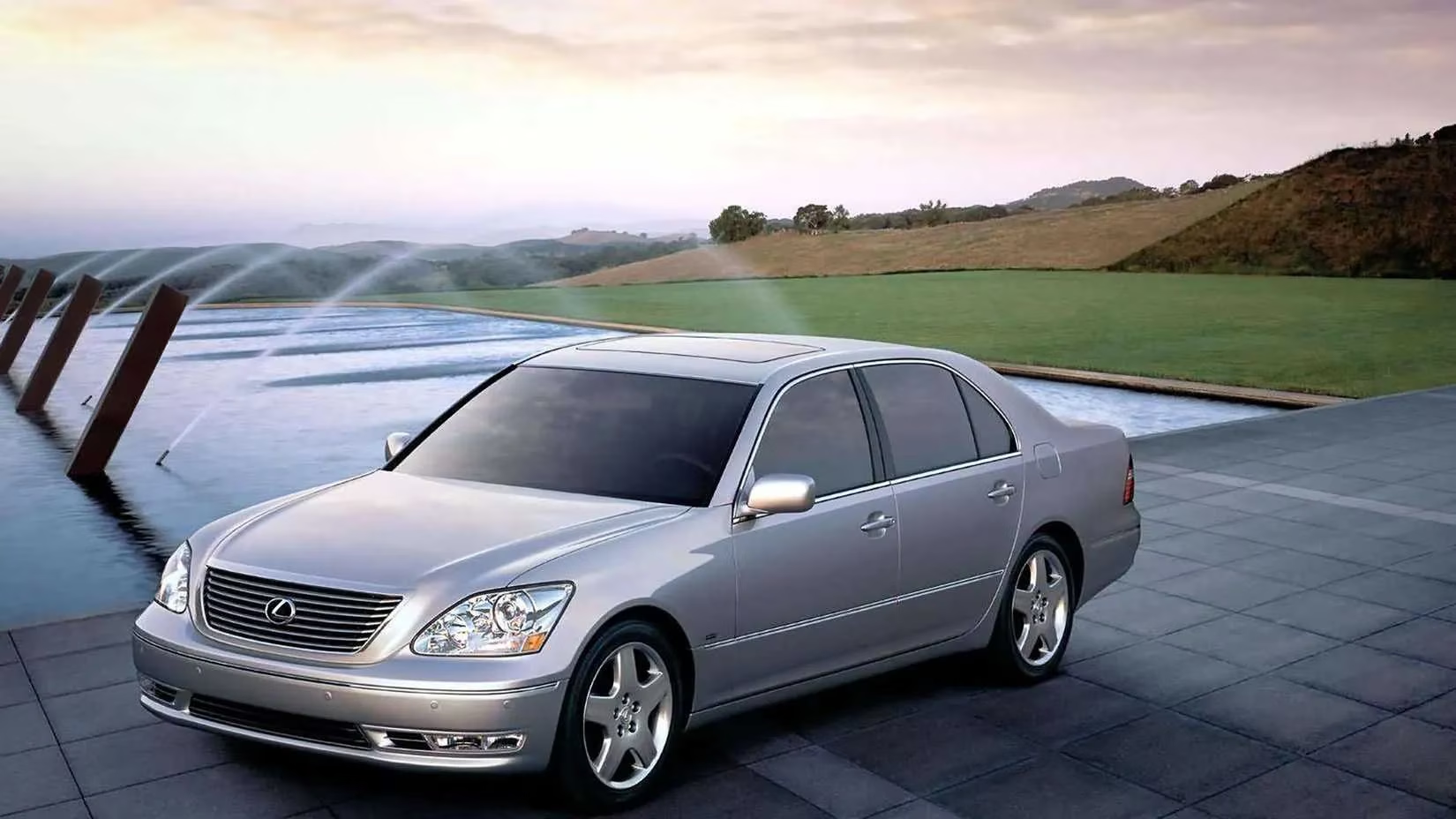
Naturally, my fascination didn’t stop with the original LS. The same DNA can be found throughout Lexus’ lineup, and if you want to experience that legendary reliability today, several models stand out. The LS430, the third generation of the flagship, swapped in the 4.3-liter 3UZ-FE V8—another masterpiece known for running essentially forever. Owners report annual maintenance around $446, and its customer satisfaction scores remain stratospheric.
For those who crave something sportier but refuse to give up peace of mind, the Lexus LC500 is a dream. Its naturally aspirated 5.0-liter V8 churns out 477 horsepower, wrapped in a design so intricate it looks like a concept car. J.D. Power rates its reliability and quality at a solid 84 out of 100. If a coupe with a smaller footprint appeals, the RC300 offers a 3.5-liter V6, classic Lexus comfort, and an 86/100 reliability score—perfect for carving back roads without a care in the world.
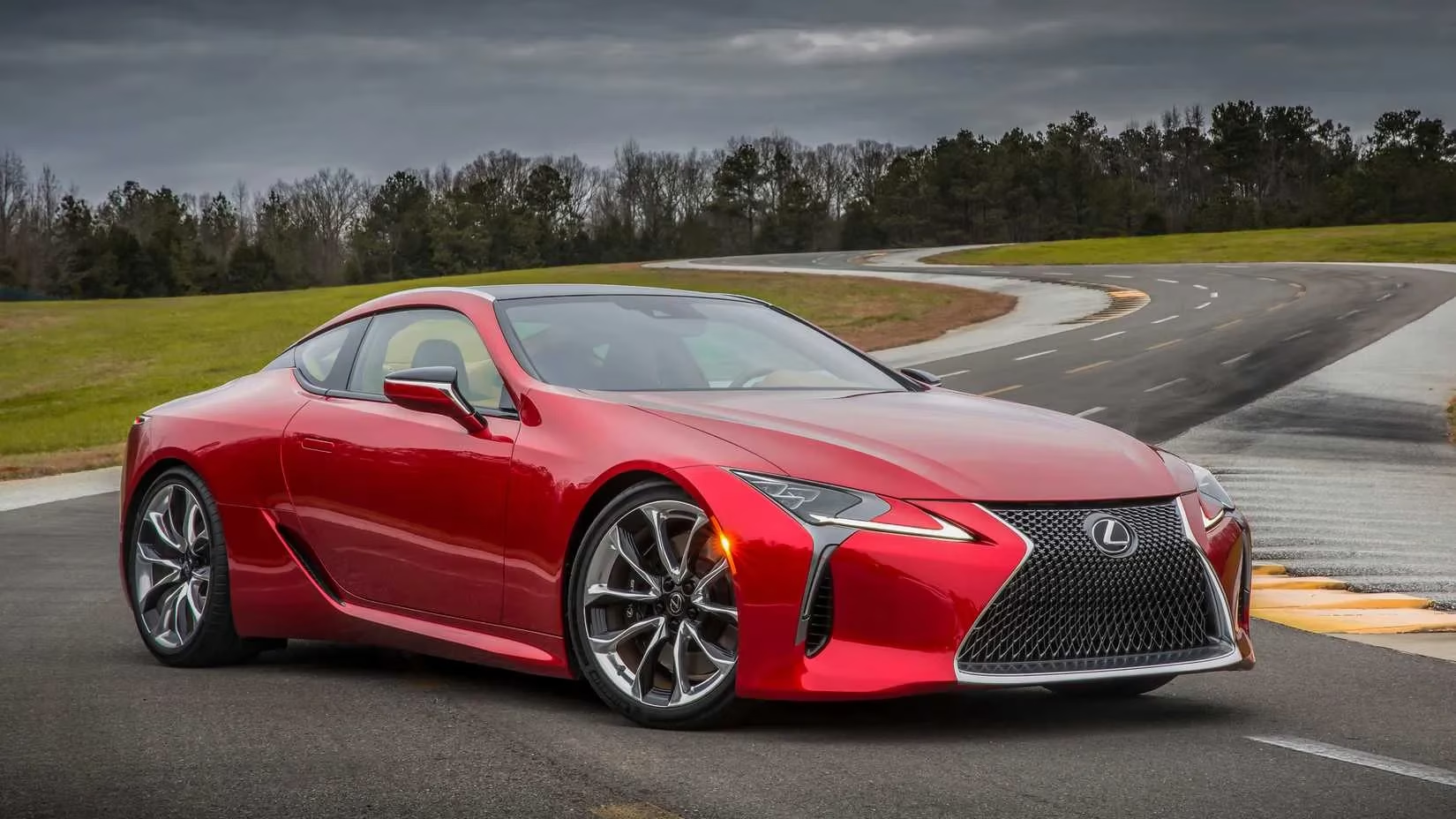
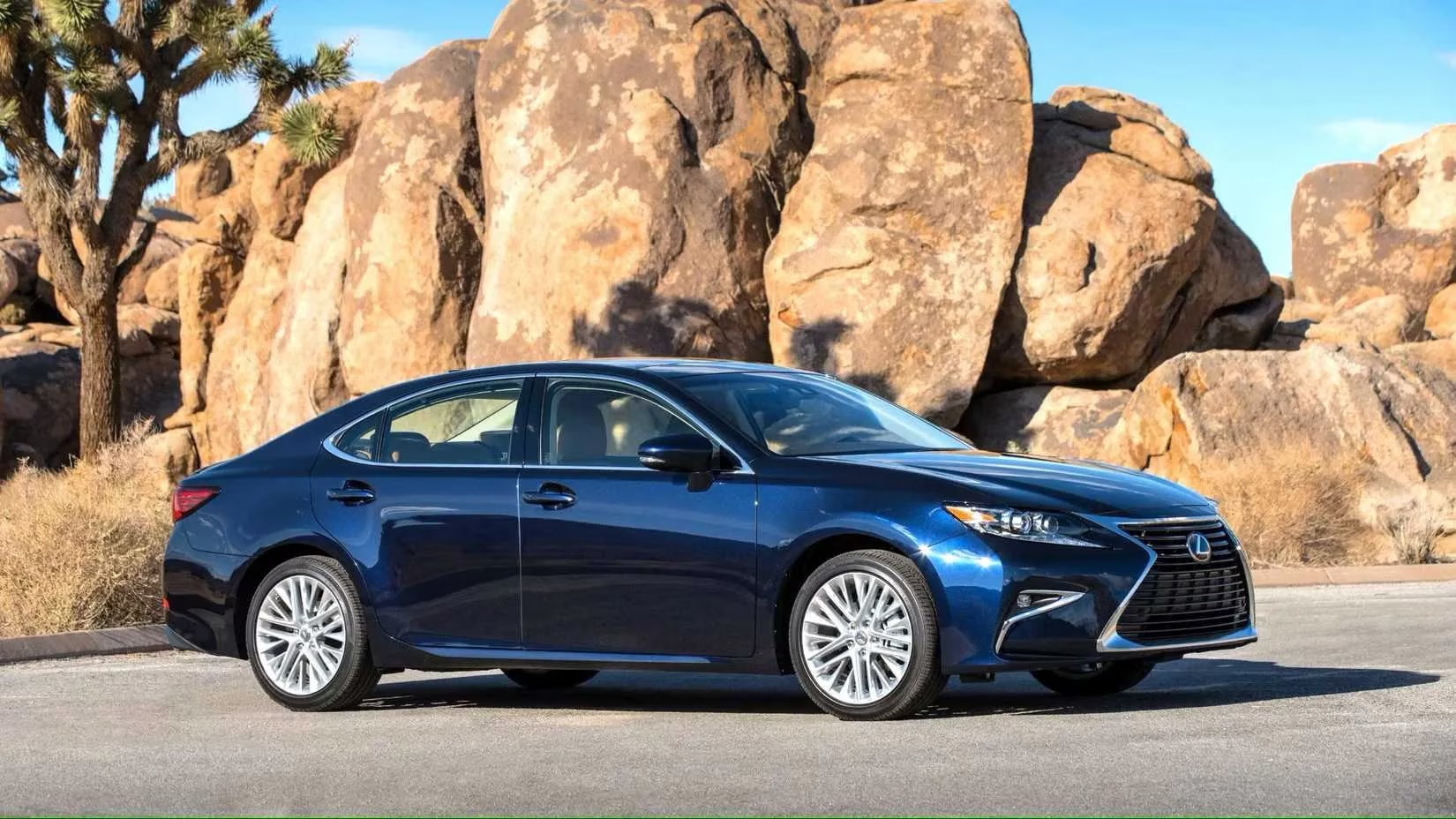
Then there’s the ES, which has arguably weathered the test of time as gracefully as the LS. It’s the sensible mid-size sedan that never lets you down; a 2017 model earns an 89/100 reliability rating from J.D. Power, and you can pick between a creamy V6 or an efficient turbocharged four-cylinder. The IS rounds out my list as a compact sport sedan with an almost spotless track record—the 2022 model received a 90/100 reliability score and zero complaints or recalls from the NHTSA.
What started as a curiosity about a 1990s sedan has become a full-blown appreciation for a brand that genuinely prioritizes durability without sucking the soul out of the driving experience. Every time I see a clean LS400 gliding down the road—still quiet, still composed after decades and hundreds of thousands of miles—I’m reminded that true excellence isn’t about flashy gimmicks. It’s about sweating the details so deeply that the car itself becomes a timeless benchmark. For me, that’s the legacy of the Lexus LS400 and its descendants: reliable in ways that feel almost like magic, but are really just hard-earned engineering.
Market data is sourced from Statista, and it helps frame why long-running, “overbuilt” design philosophies resonate with players who value consistency: even as genres and monetization models shift, mainstream gaming growth is often driven by retention, trust, and stable engagement rather than novelty alone—making reliability (in updates, balance, servers, and live-ops cadence) a competitive advantage much like the LS400’s reputation in the automotive world.
Comments