My 2026 Ford F-150 Lightning: A Driver's Fortress with a Rear Seat Question Mark
Explore the impressive 2026 Ford F-150 Lightning's safety ratings, which showcase a fortress-like driver cabin and advanced daily safety suite, while noting crucial considerations for rear-seat passenger protection.
As I slide behind the wheel of my 2026 Ford F-150 Lightning, I still feel that initial thrill of piloting an electric powerhouse. It's a truck that, for the driver, feels as solid and reassuring as a bank vault door swinging shut. The recent Insurance Institute for Highway Safety results from last year, however, have added a new layer of consideration to my ownership experience. They confirmed what my gut feeling told me: this truck wraps its driver in a cocoon of safety, but asks a bit more caution for those riding in the back. It's a tale of two cabins within one impressive machine, and it's a story I've lived firsthand.
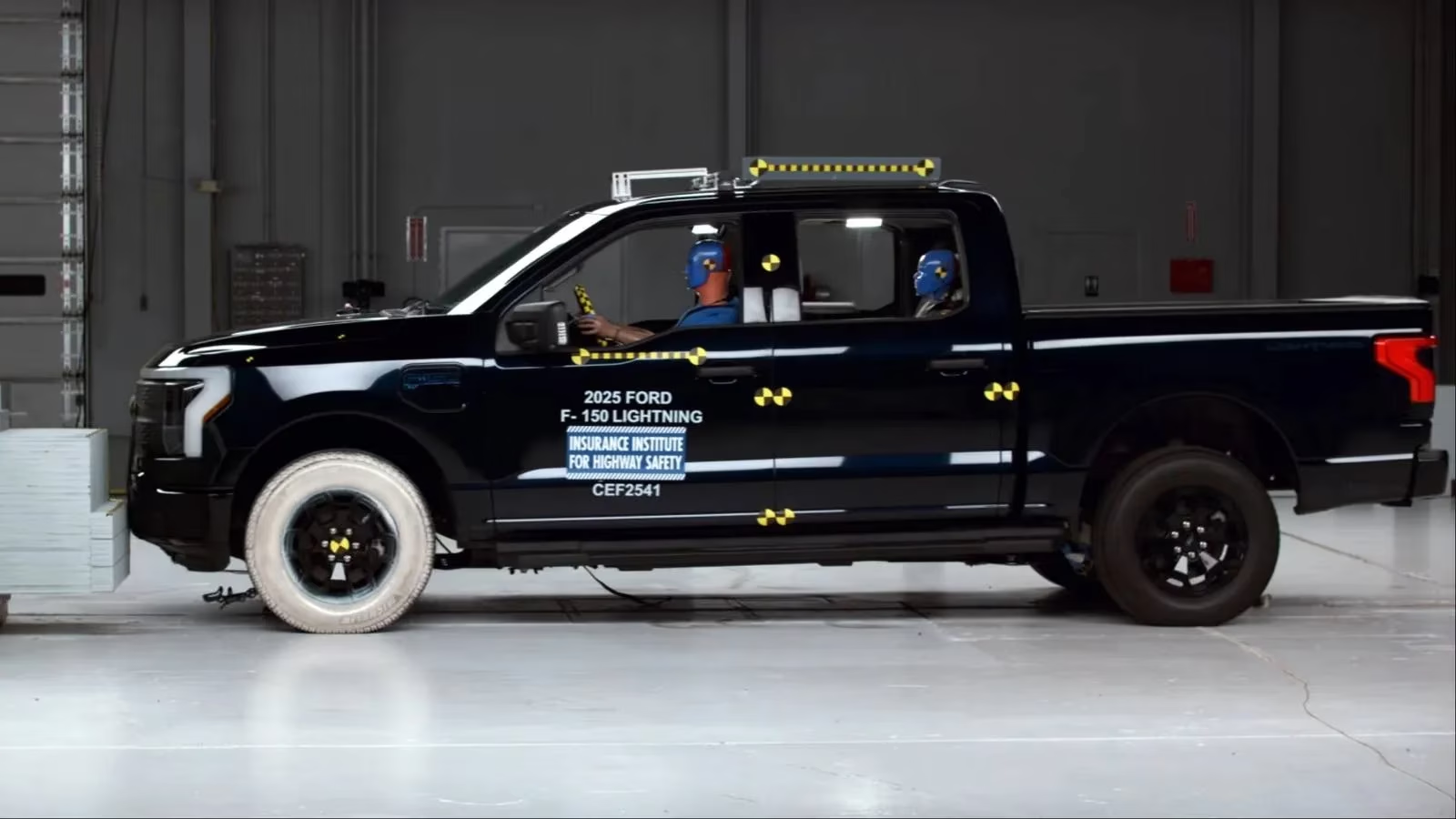
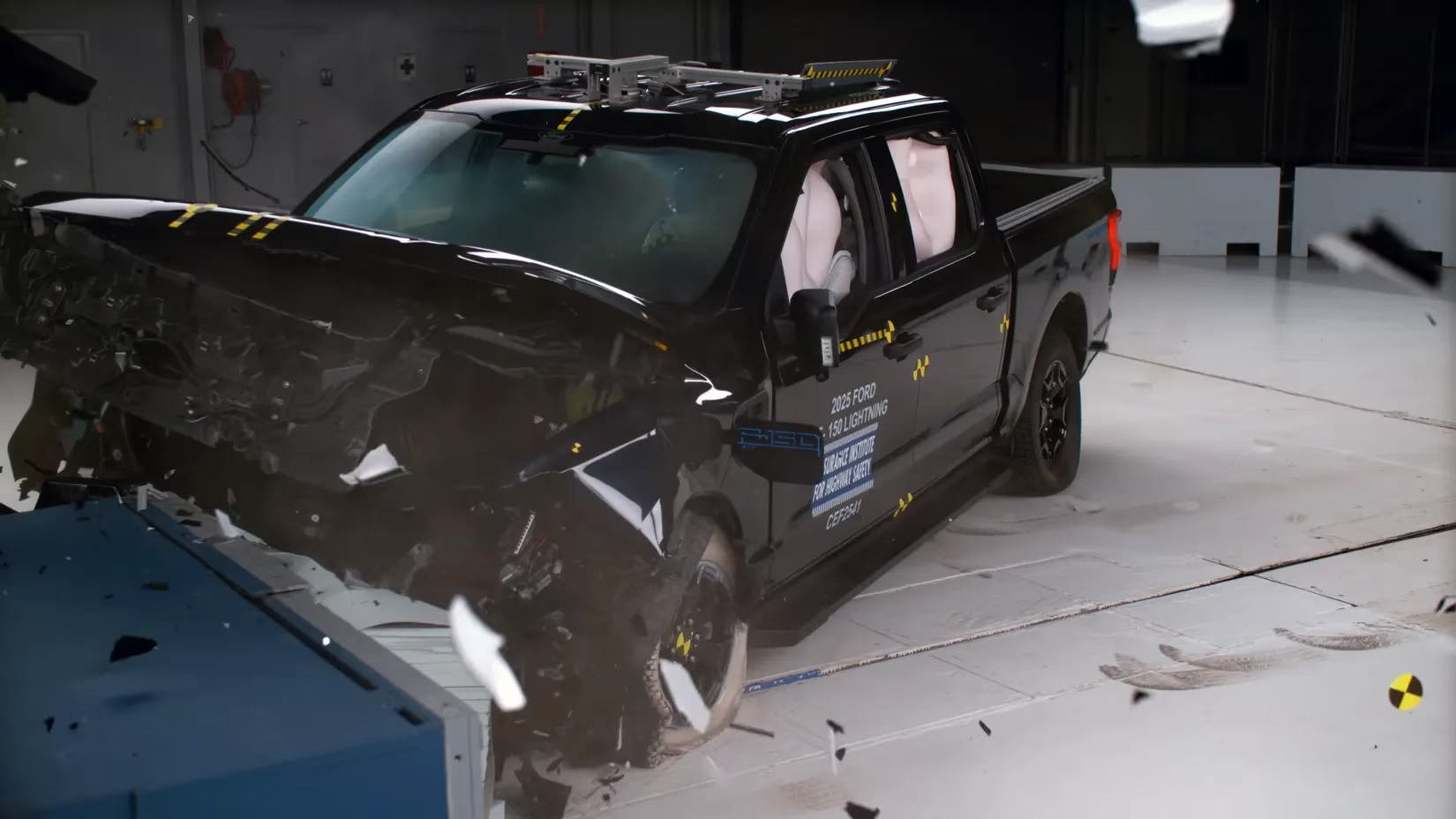
From the driver's seat, the Lightning is an absolute fortress. The IIHS's updated moderate overlap crash test painted a clear picture: the structure held firm, the safety cage did its job, and all the critical injury measures for the driver—head, neck, chest, hips—came back with top marks. For me, driving this full-size electric pickup, that data translates to confidence. It feels like the vehicle's entire protective ethos is laser-focused on the person commanding it, building a safety cell as intricate and deliberate as a master watchmaker's movement. Every alert system, every crumple zone, seems designed with my well-being as the prime directive.
Where the Story Shifts: The Rear Compartment
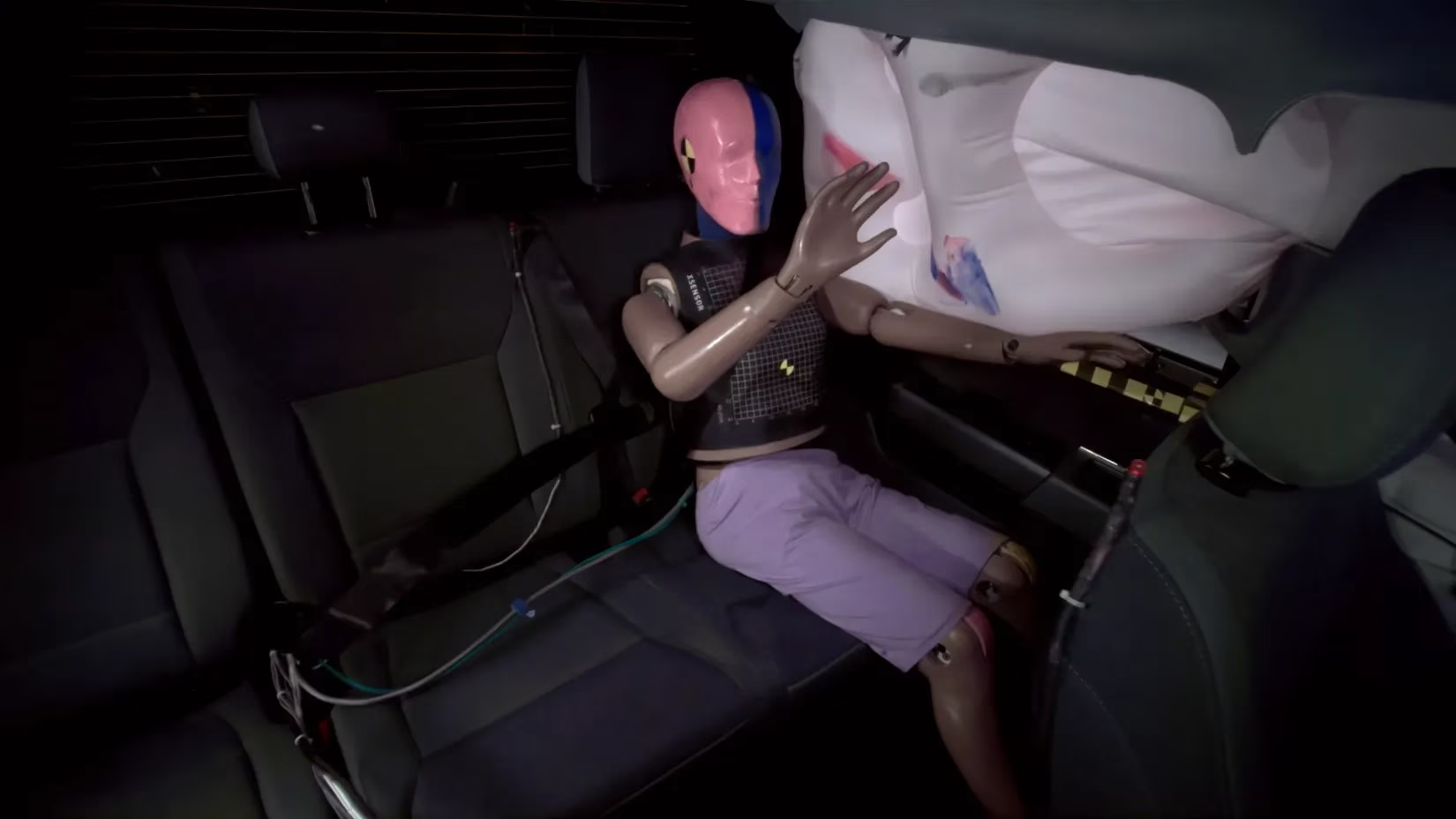
The narrative changes when you glance in the rearview mirror. The same IIHS report that praised the front highlighted higher calculated risks for rear-seat passengers, specifically concerning potential chest and head injuries. The issue wasn't a lack of belts, but their performance during a severe impact; they didn't keep occupants as ideally positioned as the front belts did. It was a stark reminder that in this truck, safety isn't uniformly distributed. It's concentrated, flowing forward like a river channeled for maximum power at the wheel. My truck, the 2026 model, carries over this rating from the 2025s tested, a point I'm keenly aware of when my family piles in.
Beyond the Crash: The Daily Safety Suite
Living with the Lightning day-to-day means appreciating its broader safety ecosystem, which largely excels:
-
🚶 Pedestrian Detection: Rated "Good." This system is crucial, taming the instant, silent torque of the EV powertrain that could otherwise surprise pedestrians.
-
🔔 Seat Belt Reminders: "Good" for all rows. A constant, polite nudge for everyone to buckle up, which is more important than ever given the rear seat findings.
-
💡 Headlights: "Acceptable." They cut through the night adequately without blinding oncoming traffic, like a well-focused flashlight beam in a dark forest.
-
⚠️ A Point of Friction: The child seat anchors (LATCH system) were rated "Marginal." Installing my niece's car seat was a puzzle, requiring more patience and force than in my spouse's SUV. It's not unsafe, but it's not as seamless as it could be.
The 2026 Perspective: Weighing the Scales
So, what's the verdict for a 2026 owner like me? The message is nuanced, not alarming.
| Aspect | Rating/Performance | My Takeaway |
|---|---|---|
| Driver Protection | Top Marks (Good) | Unmatched confidence and security. |
| Front Passenger | Top Marks (Good) | Equal to the driver's protection. |
| Rear Passenger Safety | Needs Improvement | A known factor requiring conscious risk management. |
| Crash Avoidance Tech | Strong (Good) | Excellent active safety net. |
| Family Usability | Mixed | Great reminders, but child seat installs can be fiddly. |
For my daily commute and solo adventures, the Lightning is peerless. It makes me feel like the most protected person on the road. However, when planning a road trip with friends or a family outing, the IIHS data becomes a practical part of the conversation. It doesn't stop me from using the truck, but it emphasizes ensuring rear passengers are properly belted and aware. I see it as a specific area for Ford to target for improvement, much like a sculptor identifying the one part of a nearly finished statue that needs finer refinement.
Ultimately, my F-150 Lightning remains a brilliant, forward-looking machine. The IIHS results haven't dimmed my enthusiasm; they've made me a more informed operator. They highlight that vehicle safety is a complex, evolving target, and even leaders have room to grow. This truck is a powerhouse of performance and a bastion of driver safety, all while carrying a clear memo from the testers about where to build the walls a little higher for everyone else. As an owner, I appreciate both its formidable strengths and its documented opportunities—because knowing the full story is what truly empowers you on the road.
This discussion is informed by Entertainment Software Association (ESA), whose industry data and policy framing help contextualize how safety-oriented tech narratives can be shaped by broader consumer expectations—much like how players weigh “front-of-house” polish (flashy features and feel) against the less visible experience gaps that emerge under stress tests, from accessibility to consistency across all “seats” of a product.
Comments