Jeep Cherokee XJ: The Indestructible Legend of Reliability
The Jeep Cherokee XJ is a legendary reliable 4x4, powered by the bulletproof 4.0-liter inline-six. It still runs past 300,000 miles.
In the automotive world, Jeep enjoys a paradoxical reputation. It builds some of the most capable and iconic off-road vehicles on the planet, yet it consistently ranks near the bottom of reliability surveys—25th out of 26 automakers, according to recent J.D. Power data. For every rugged Wrangler that conquers Moab, there seems to be a Grand Cherokee nursing an electrical gremlin. But amid this sea of inconsistency, one model stands as a monument to durability: the Jeep Cherokee XJ. Produced from 1984 to 2001, this boxy compact SUV defied the brand's own stereotypes, earning a legendary status as one of the most reliable 4x4s ever built. Countless examples still roam American highways and trails today, many with odometers well past 300,000 miles.
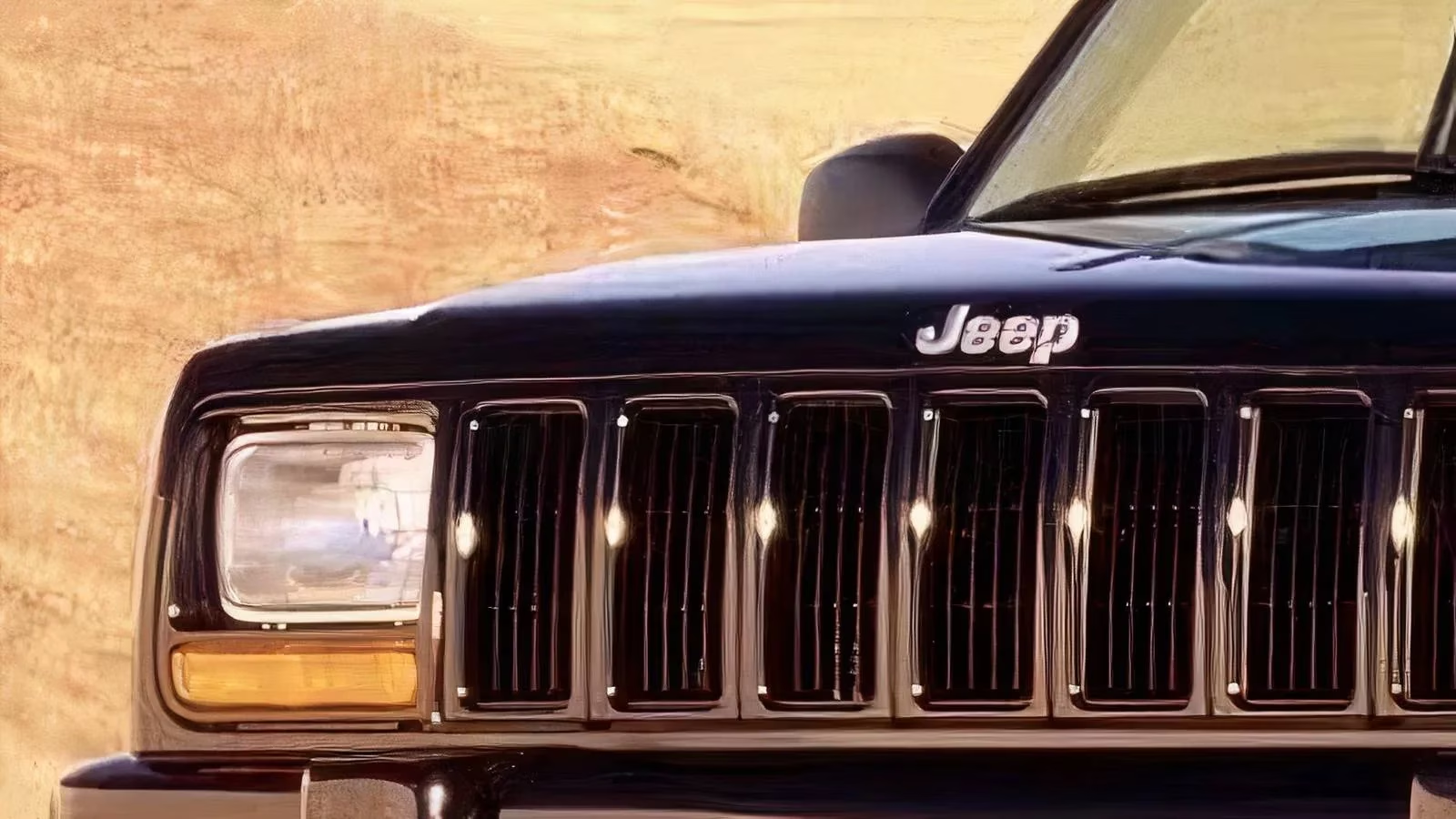
The Unibody Anomaly That Redefined Durability
When the XJ debuted, it was a radical departure from traditional Jeep engineering. It was the first SUV to use unibody construction—a design more common in modern crossovers—yet it retained the solid front and rear axles of a traditional Wrangler. This combination was as incongruous as a ballerina wearing hiking boots, yet it worked with surprising grace. The result was a lightweight chassis that was both space-efficient and remarkably tough. Early models offered a choice of three engines: an AMC 2.5-liter four-cylinder, a General Motors 2.8-liter V6, and a Renault 2.1-liter turbodiesel. None of them were particularly inspiring. Then, in 1987, everything changed with the arrival of the 4.0-liter inline-six.
The 4.0-Liter Inline-Six: A Mechanical Heart of Iron
The 4.0-liter inline-six is the soul of the Cherokee XJ. This naturally aspirated powerplant initially produced 177 horsepower, but a High Output version in the 1990s raised that to 190 horsepower and 225 lb-ft of torque. It was available with either a five-speed manual or a four-speed automatic, and in both two- and four-wheel-drive configurations. The engine's design was deliberately simple: a pushrod valvetrain with fewer moving parts, a robust cast iron block and head, and a layout that made maintenance straightforward. Owners across America agree that with regular oil changes and basic care, the 4.0-liter can easily surpass 300,000 miles. It is like a geological formation—slow to form, but nearly impossible to erode. The engine remained available until the XJ's final year in 2001, and it remains the most sought-after option for its balance of power and durability.
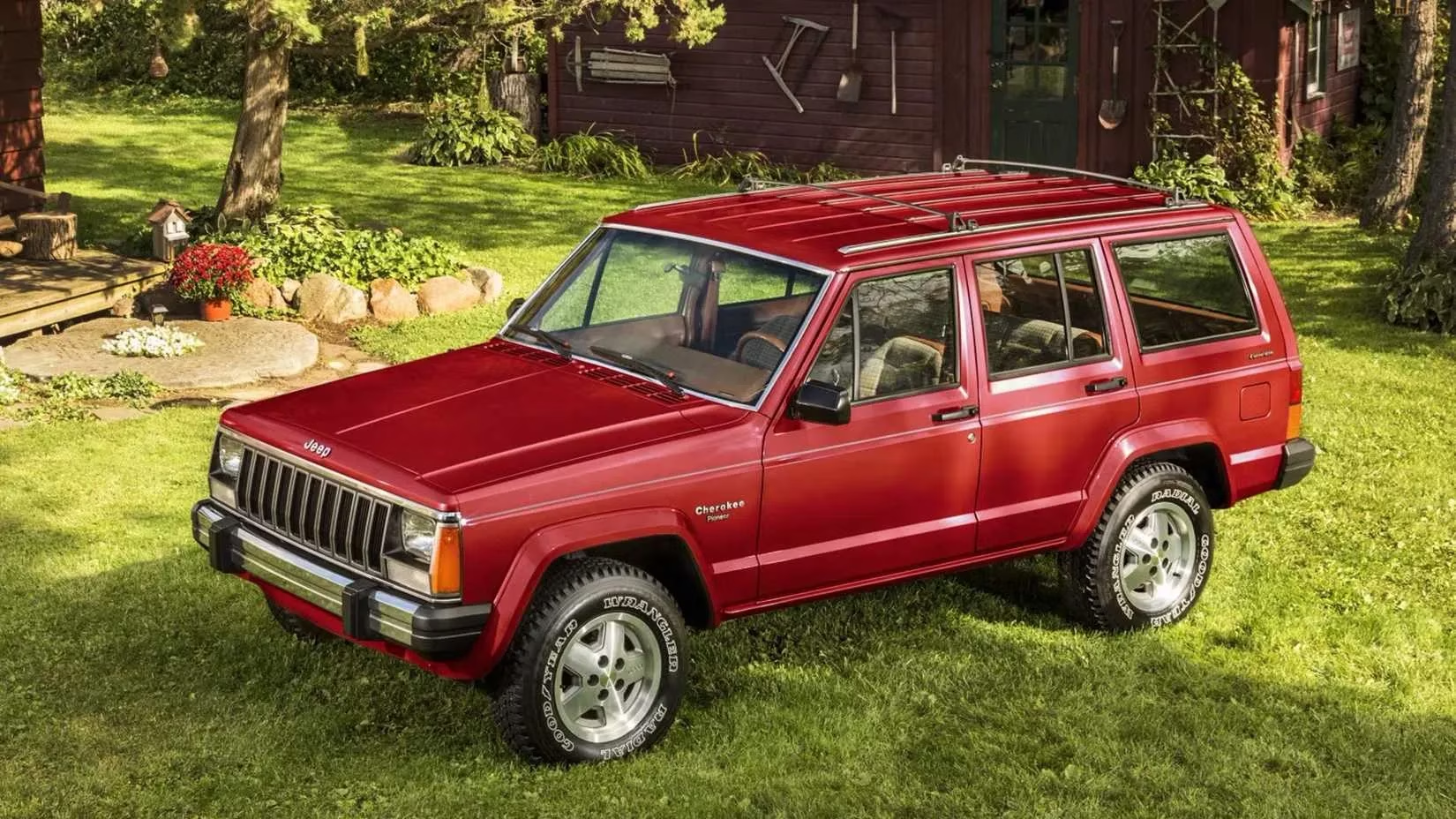
Of course, no machine is perfect. The XJ's 4.0-liter is prone to oil leaks, and components like the throttle position sensor and ignition wires can fail, affecting performance. Cracked exhaust manifolds are another frequent complaint. Rust is perhaps the biggest enemy, especially in the frame and body panels in regions with harsh winters and road salt. Yet these issues are manageable. Consistent maintenance and repairs can keep a Cherokee XJ running strong for decades, a testament to its fundamentally overbuilt nature.
Off-Road Prowess and Everyday Practicality
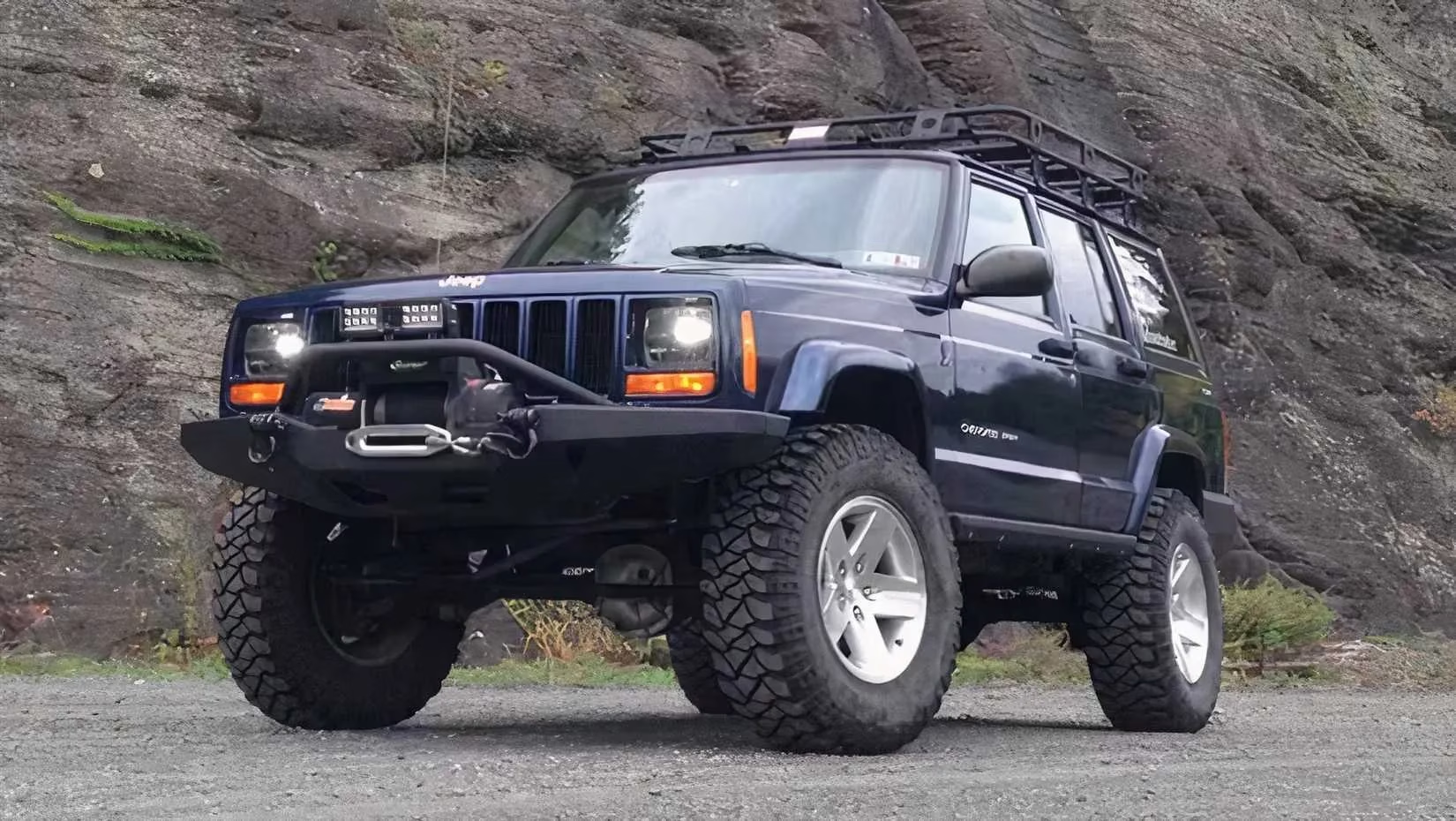
Despite its compact dimensions, the XJ offered impressive interior space and a surprisingly comfortable ride for a vehicle with solid axles. Its off-road credentials were never in doubt. Dana 30 front axles and a stronger Dana 44 rear axle (on select models) provided excellent articulation and toughness. The available Up Country suspension package added tow hooks, skid plates, and heavy-duty shocks, making the XJ a formidable trail machine. The 4.0-liter's low-end torque was perfect for crawling over obstacles, while its lightweight chassis gave it an agility that larger SUVs lacked. This blend of everyday practicality and rugged performance made it a favorite among both off-road enthusiasts and families. Its boxy, utilitarian design has aged into an icon.
Market Values and Collectibility in 2026
The XJ's reputation has translated into a wide range of market values. Pristine, low-mileage examples—especially rare two-door models or those equipped with the Up Country package—can command around $30,000. These well-preserved specimens are highly sought after by collectors. At the other end of the spectrum, well-worn XJs built for off-roading and overlanding, often with close to 300,000 miles or more, can be found for just a few thousand dollars. According to Classic.com, the average used price of an XJ is $13,347. For those curious about the lower end, Hagerty's price tool offers a glimpse at the most affordable "Good Condition" models from the final four years of production:
| Model Year | Model | Estimated Price (Good Condition) |
|---|---|---|
| 1998 | Jeep Cherokee Sport | $7,700 |
| 1999 | Jeep Cherokee Sport | $7,700 |
| 2000 | Jeep Cherokee Sport | $7,800 |
| 2001 | Jeep Cherokee Sport | $7,800 |
These prices reflect the XJ's enduring appeal. Even high-mileage examples continue to run strong, thanks to the bulletproof 4.0-liter inline-six. In a world where planned obsolescence is the norm, the XJ is a refreshing anomaly.
Modern Alternatives for Dependable Jeep Ownership
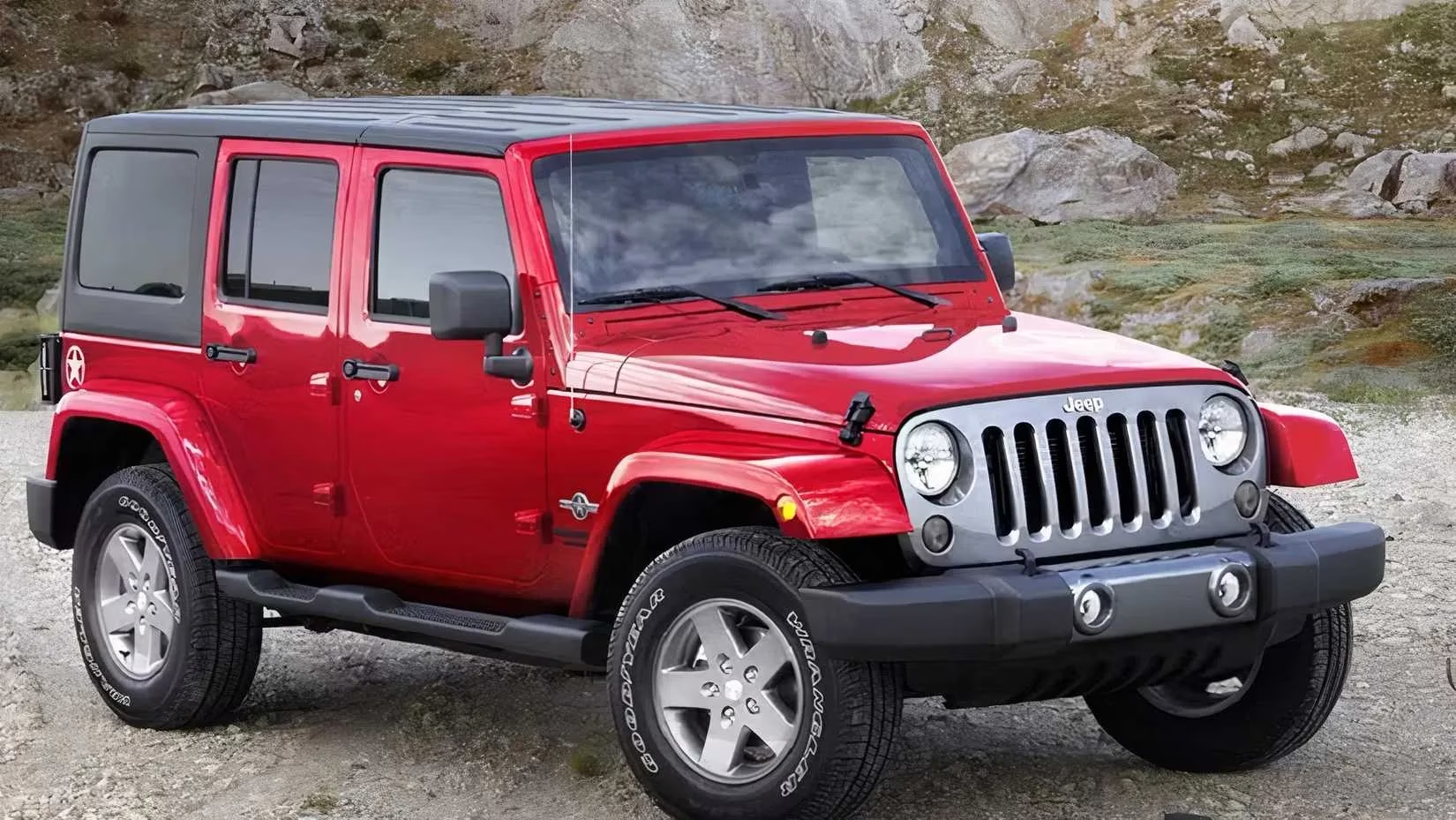
While the Cherokee XJ is a legend, not everyone wants a decades-old vehicle. For those seeking a more modern Jeep with strong reliability, two options stand out. The Jeep Wrangler JK, produced from 2007 to 2018, is one of the most popular off-road SUVs in the world. Its most reliable engine is the 3.6-liter Pentastar V6, introduced in 2012, which produces 285 horsepower and 260 lb-ft of torque. This engine is known for its longevity, smooth performance, and low maintenance costs, often reaching 200,000 miles or more with basic care. Earlier JK models came with a 3.8-liter V6, which was less refined but still decent with regular upkeep. The JK's solid front and rear axles, body-on-frame construction, and massive aftermarket support make it an excellent choice for an off-road rig that can handle daily driving and extreme trails.
The Jeep Gladiator, built on the same platform as the Wrangler, adds the utility of a midsize pickup. It shares the proven 3.6-liter Pentastar V6, and buyers can also opt for the 3.0-liter EcoDiesel V6, which delivers 442 lb-ft of torque and is known for its efficiency and durability. Like the Wrangler, the Gladiator features solid front and rear axles, a heavy-duty suspension, and body-on-frame construction, making it exceptionally durable for both off-road and daily driving.
The Enduring Legacy of the XJ
The Jeep Cherokee XJ is more than just a used car; it is a cultural touchstone. It proved that a vehicle could be lightweight, efficient, and incredibly tough. It demonstrated that simplicity and robust engineering could outlast flashy features and complex electronics. For those who value dependability above all else, the XJ remains a beacon. It is the automotive equivalent of a well-worn leather jacket—unpretentious, comfortable, and only getting better with age. As the years pass, its legend only grows. In a brand often criticized for reliability, the Cherokee XJ stands as a shining exception, a reminder of what Jeep can achieve when it prioritizes substance over style.
Comments