GM's Epic Blunder: The Tragic Cancellation of the Cadillac CT6 Sedan That Still Haunts Executives in 2026
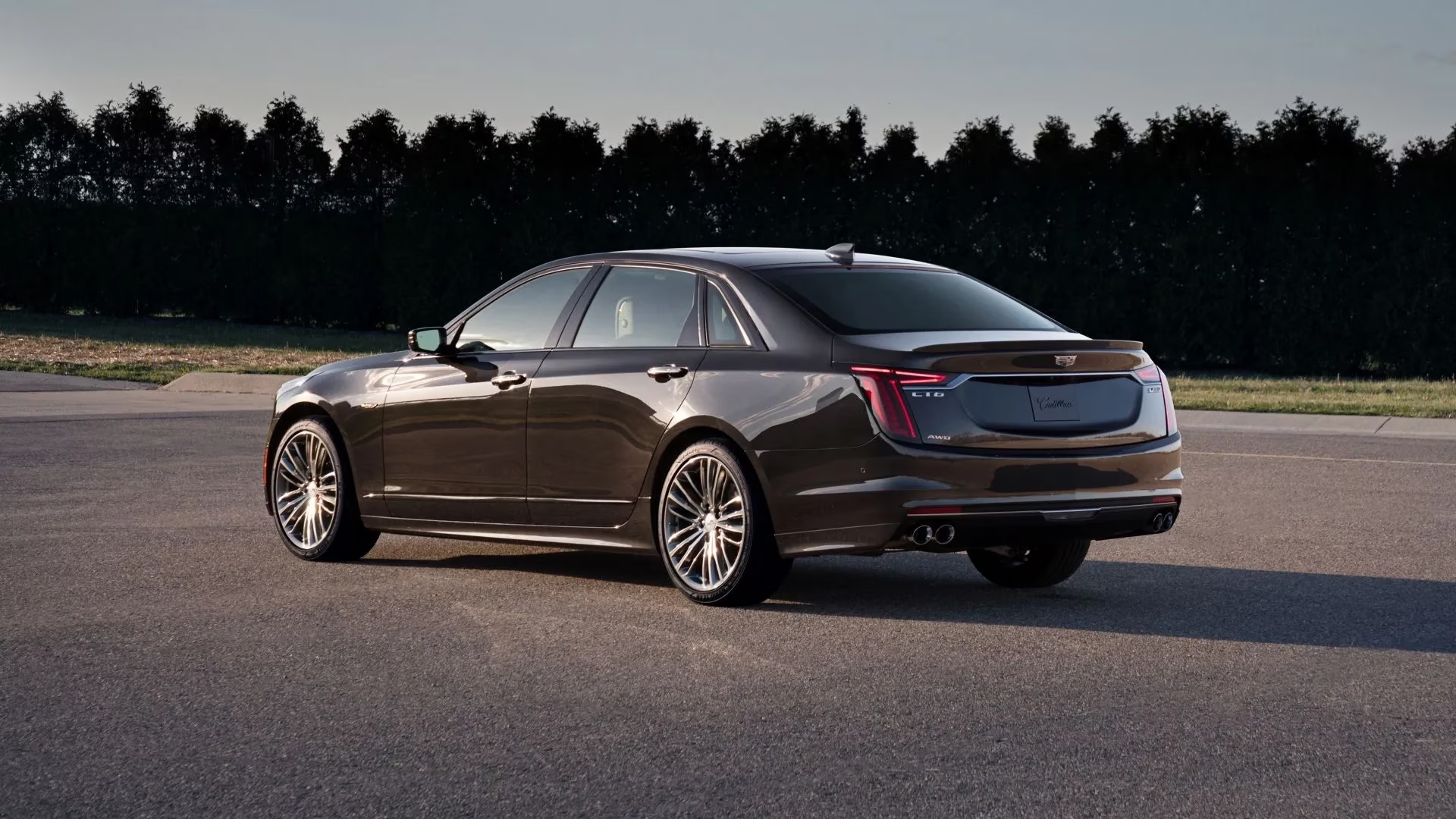
Cadillac CT6 sedan, a luxury masterpiece, was a bold rival to Mercedes-Benz S-Class and Lexus LS, tragically discontinued by GM.
In the annals of automotive history, few decisions will be remembered as spectacularly misguided as General Motors' abrupt execution of the Cadillac CT6 sedan. Picture this: a full-size luxury masterpiece, a veritable steel-and-leather titan that dared to challenge European royalty like the Mercedes-Benz S-Class and Lexus LS, not with brute force, but with brilliant, cut-price sophistication. It arrived in 2016, a beacon of American luxury ambition, only to be unceremoniously put out to pasture in North America by 2020—a mere four-year reign. Fast forward to 2026, and the ghost of the CT6 looms large over GM's executive suites, a phantom limb of regret that CEO Mark Reuss himself has publicly lamented as a catastrophic error. While the compact CT4 and mid-size CT5 are now following it into the sunset, the CT6's story remains the original sin, a cautionary tale of sacrificing a king for a gamble on an unproven electric future.
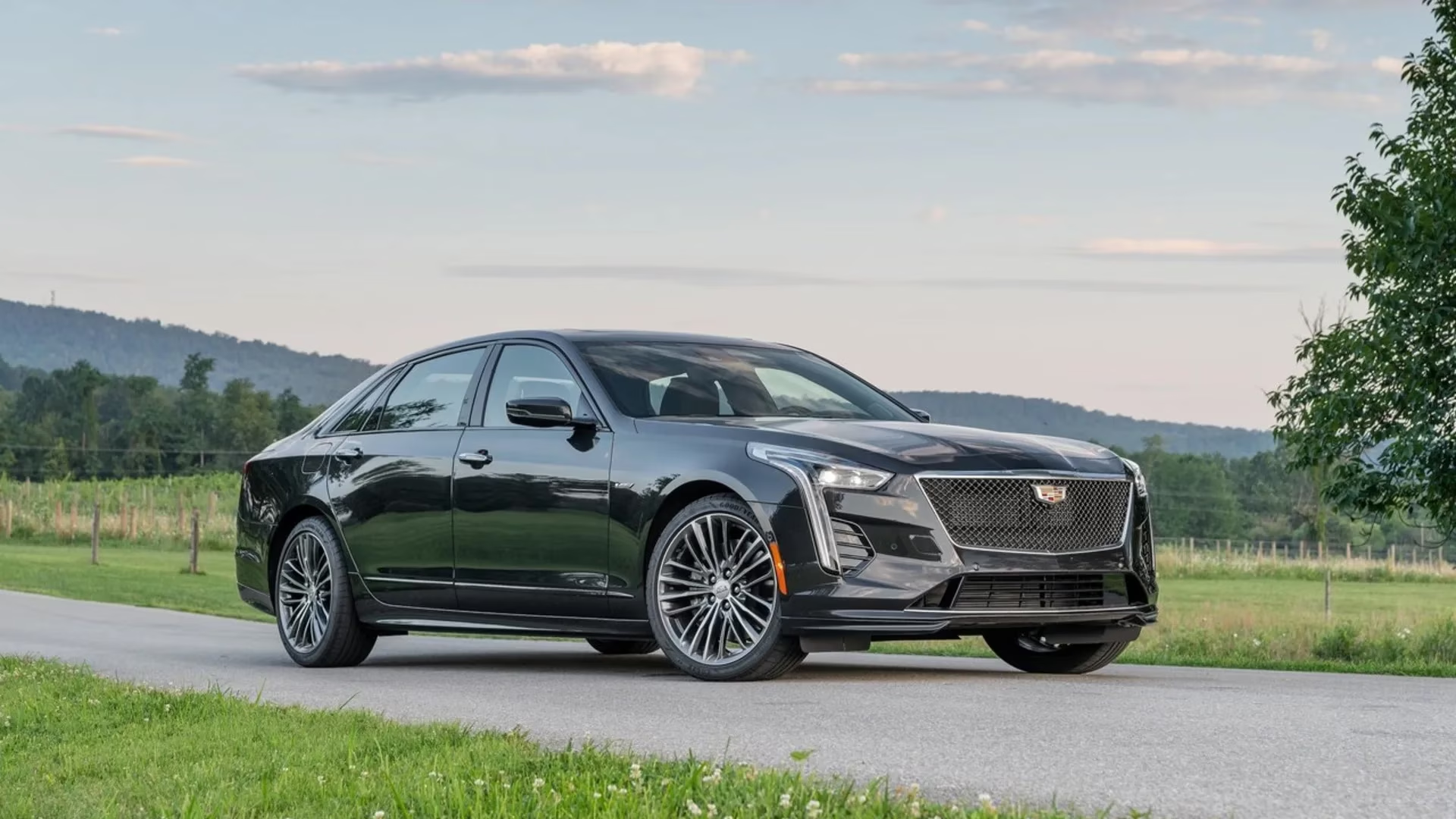
The Unforgivable "Tough Decision"
The confession, when it finally came, was nothing short of astonishing. During a remarkably candid moment on a popular industry podcast, GM President Mark Reuss laid bare the corporate soul, admitting the company should have never, ever discontinued the Cadillac CT6. He called it one of those "tough decisions," but in 2026, with the benefit of brutal hindsight, it looks less like a tough call and more like a self-inflicted wound of historic proportions. The rationale at the time was cold, hard manufacturing logistics: the Detroit-Hamtramck Assembly plant, the CT6's birthplace, was needed for the grand electric revolution. The factory was to be reborn as "Factory Zero," a shrine to GM's Ultium platform, destined to churn out behemoths like the GMC Hummer EV, the Chevrolet Silverado EV, and the Cadillac Escalade iQ. The CT6, in all its V8-powered glory, was deemed expendable collateral.
The CT6's Glorious Legacy & Its Bitter Absence
Oh, what the American luxury buyer lost! The CT6 was not just a car; it was a statement. It represented a rare moment where Cadillac delivered a world-class flagship that didn't demand a world-class fortune. Let's break down the sheer value it offered:
-
Price Point Perfection: The 2020 CT6, in its final North American model year, started at a mere $59,000. Compare that to the competition at the time:
-
2020 Lexus LS: ~$75,000
-
2020 Mercedes-Benz S-Class: ~$94,000
The CT6 undercut them by tens of thousands of dollars, offering 90% of the luxury for 60% of the price. It was a value proposition that resonated with savvy luxury seekers.
-
-
A Thriving Parallel Universe: The ultimate insult? While GM killed it in North America, the Cadillac CT6 didn't just survive in China—it thrived. It received a comprehensive second-generation redesign in 2023 and continues to sell strongly there, a constant reminder of what could have been in the U.S. market.
-
The Celestiq Is NOT the Answer: Cadillac does have a new flagship, the all-electric, hand-built Celestiq. But let's be real—it's a $340,000 halo car that battles Bentley and Rolls-Royce. It is a technological marvel, but it is not, and will never be, a replacement for the accessible, volume-oriented luxury the CT6 provided. It exists in a different stratosphere entirely.
The Domino Effect of Regret in 2026
Reuss's CT6 regret is not an isolated incident; it's part of a pattern of electrification-era remorse that is defining GM's 2026 narrative. The executive also publicly mourned the demise of the beloved, affordable Chevrolet Bolt EV hatchback (though its name returns in 2027 as a crossover) and even the legendary EV1 from the turn of the century. This chorus of "what-ifs" is set against a backdrop of stark reality for GM's electric ambitions:
-
The Factory Zero Conundrum: The plant that replaced the CT6's home is struggling. Due to weak demand for the GMC Hummer EV and Cadillac Escalade iQ, Factory Zero has been forced to lay off hundreds of employees. The $2.2 billion conversion cost is a massive investment that, so far, has not yielded the promised returns.
-
The Sedan Apocalypse: With the CT4 and CT5 ending production after the 2026 model year, the Cadillac sedan lineup in the U.S. will consist solely of the unattainable Celestiq. The brand has essentially vacated the entire mainstream luxury sedan market it once sought to lead.
-
Sales Reality Check: While GM's large electric trucks and SUVs are finding some buyers, their sales volumes remain a mere fraction of their gas-powered ancestors—the cash-cow Cadillac Escalade, Chevy Silverado, and GMC Sierra. The gamble to trade proven sedan volume for uncertain EV prestige is looking increasingly questionable.
The Final Verdict: A Masterpiece Sacrificed
The story of the Cadillac CT6 is a tragedy in three acts: a brilliant debut, a premature cancellation, and a long, lingering regret. In 2026, it stands as a monument to a lost opportunity. GM, in its rush to an all-electric future, dismantled a legitimate, competitive, and profitable franchise in the high-stakes full-size luxury sedan segment. They traded a reigning champion for a roll of the dice on untested electric titans, and the dice, so far, have not landed in their favor. The CT6 was more than a car; it was proof that American luxury could compete on the global stage without apology. Now, its absence is a silent, expensive rebuke to every executive who signed its death warrant—a ghost in the machine of General Motors, reminding them that sometimes, the toughest decision is to leave a masterpiece alone. :car: :skull: :money_with_wings:
Comments