Ford Maverick’s Journey from Bargain Truck to Pricey Pickup
Ford Maverick's steep price hike erodes its identity as an affordable compact truck, with 2026 models starting near $31,000.
When the Ford Maverick first hit the scene, it felt like a breath of fresh air in a truck market bloated with oversized, overpriced rigs. The compact unibody pickup promised something no other automaker dared to offer: a genuinely affordable entry point. At launch, buyers could drive off in a brand-new Maverick for under $20,000. That magic number was the cornerstone of its identity. Fast forward to 2026, and that cornerstone has crumbled into dust.
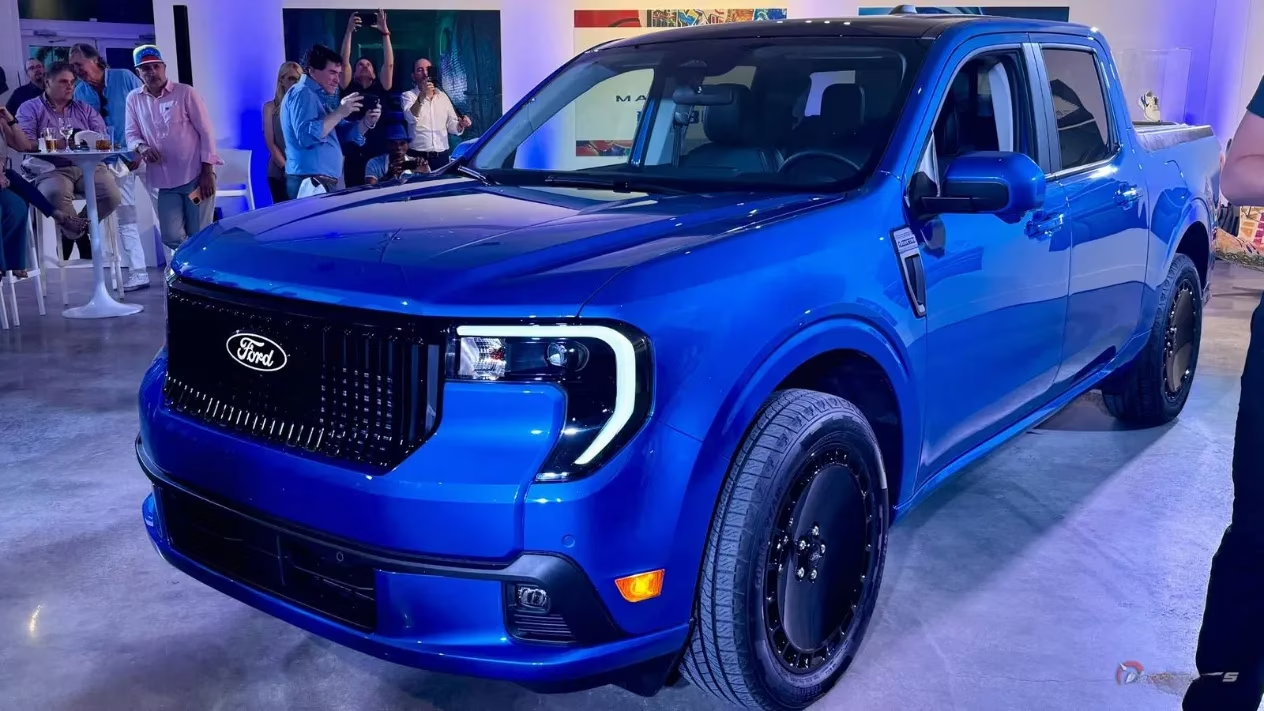
The numbers tell a stark story. Back in 2025, an internal Ford memo (leaked to the FordMaverickTruck subreddit) quietly announced mid-year pricing adjustments that raised eyebrows and blood pressure across the enthusiast community. Those changes took effect on May 2, 2025, targeting what the memo called "imported vehicles." The word "imported" was key—it hinted at the tariff pressures that were already reshaping the automotive landscape. While existing dealer inventory was spared, the new wave of orders would carry an extra burden.
How much of a burden? Pretty much every trim level got pinched. The base XL and mid-tier XLT hybrids with front-wheel drive jumped by $1,150. The Lariat hybrid with all-wheel drive saw an identical hike. Even the performance-oriented Lobo and the rugged Tremor weren’t immune, with increases of $675 and $645 respectively. Gas-only all-wheel-drive configurations across XL, XLT, and Lariat climbed by $700. And in classic death-by-a-thousand-cuts fashion, destination and delivery charges crept up another $100, pushing the total delivery fee to $1,695. A few bed cover options got nicked too—hard folding covers went up $80, hard roll-ups the same, and the soft folder added a token $10.
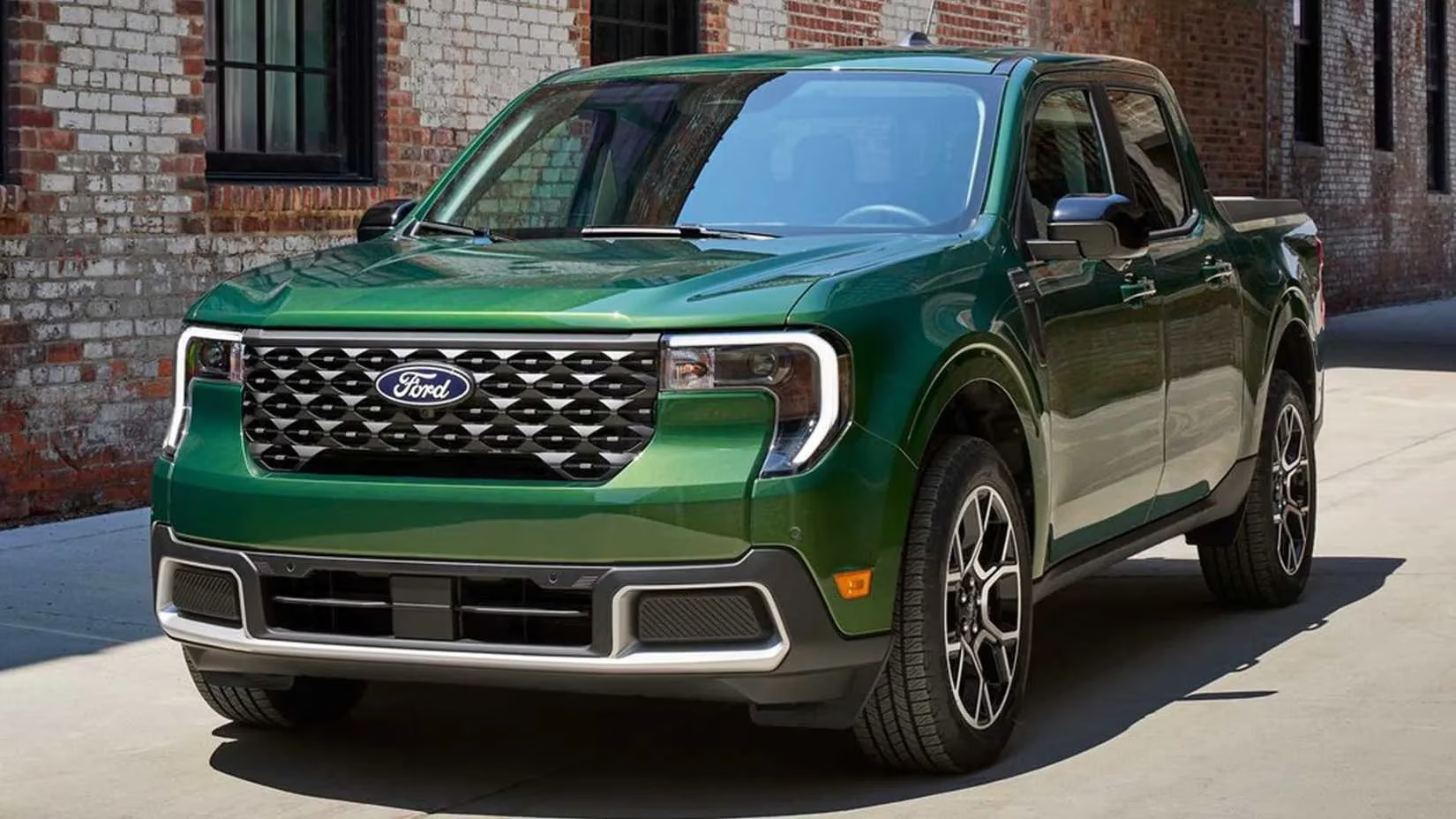
As a result of those 2025 adjustments, the cheapest possible Maverick sticker price ballooned to $29,840. That’s more than $8,000 above its original launch MSRP. For a vehicle built on the promise of democratizing truck ownership, the math started to look a lot less democratic.
Now, sitting here in 2026, we can see the long shadow of that May 2025 memo. The tariff situation didn’t magically resolve itself after July 7, 2025, when Ford’s “From America. For America.” employee pricing promotion wrapped up. In fact, industry analysts point out that raw material costs and ongoing trade disputes have kept upward pressure on vehicle pricing ever since. While Ford hasn’t issued a single, blockbuster price revision this year, the incremental creep continues. The 2026 Maverick now starts dangerously close to $31,000 for the base hybrid, and popular configurations like the Lariat all-wheel drive routinely push past $38,000 before options. That’s midsize truck money in a compact package, and it fundamentally alters the value proposition.
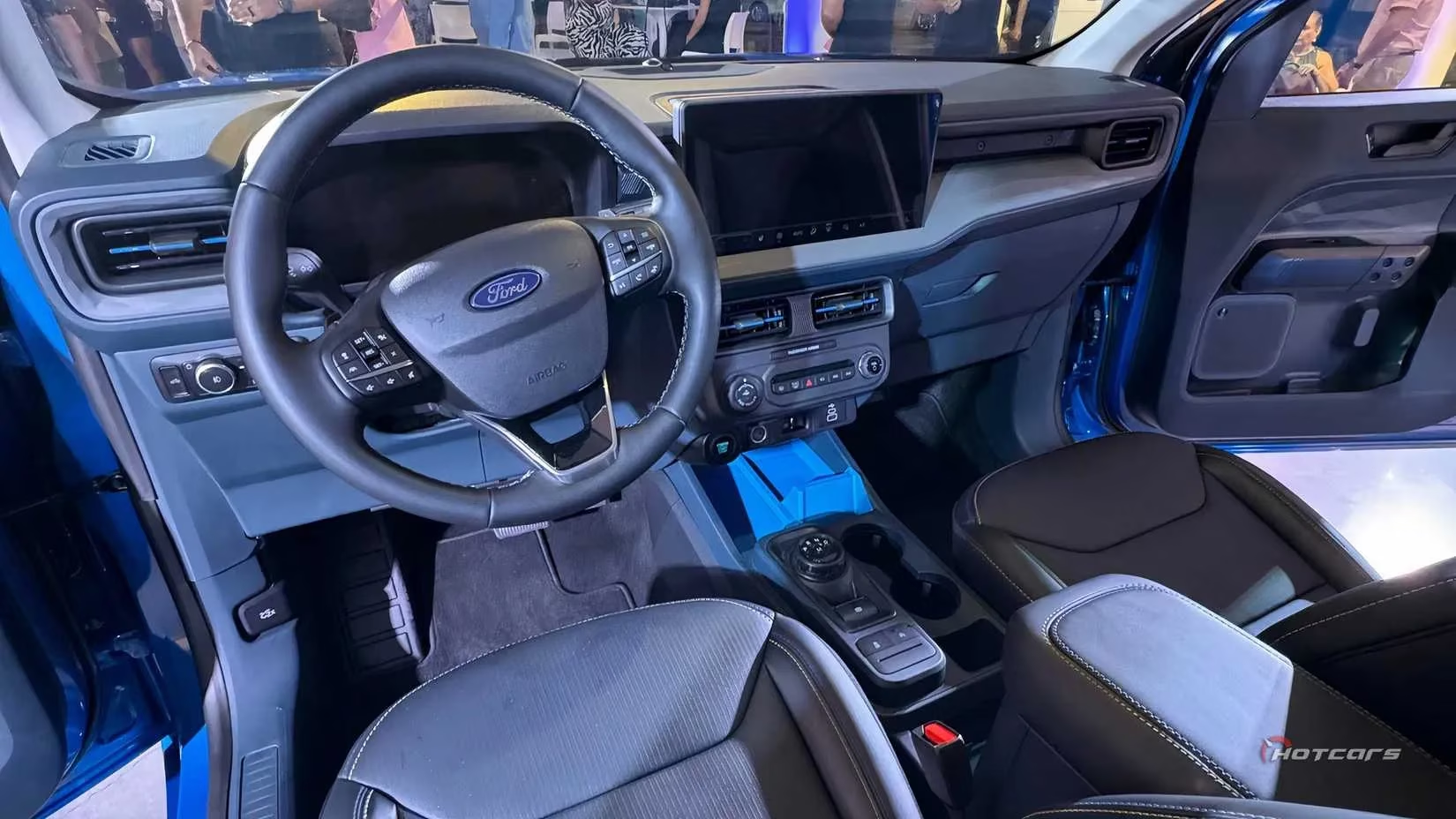
Why does this matter so much? Because the Maverick’s soul was never about horsepower figures or maximum towing capacity. Its genius lay in versatility at a price that made you grin. It was the truck for people who didn’t want to overspend just to haul some mulch or a mountain bike. Early adopters bragged about sub-$22,000 out-the-door deals, and that word-of-mouth buzz catapulted the Maverick to sales success. Dealers couldn’t keep them on lots. Today, the conversation has shifted. Forums are full of potential buyers wrestling with the same question: at nearly $30,000, does the Maverick still make sense when a lightly used full-size truck or a well-equipped crossover sits in the same price bracket?
The answer isn’t a simple yes or no. The Maverick still delivers clever storage, a comfortable ride, and—for hybrid models—excellent fuel economy that no traditional body-on-frame truck can touch. Its cabin is thoughtfully designed, and the Flexbed system remains a stroke of genius for DIYers. But the price surge erases the impulse-buy excitement. Where someone once might have overlooked a few hard plastics because the window sticker was so appealing, now every penny counts.
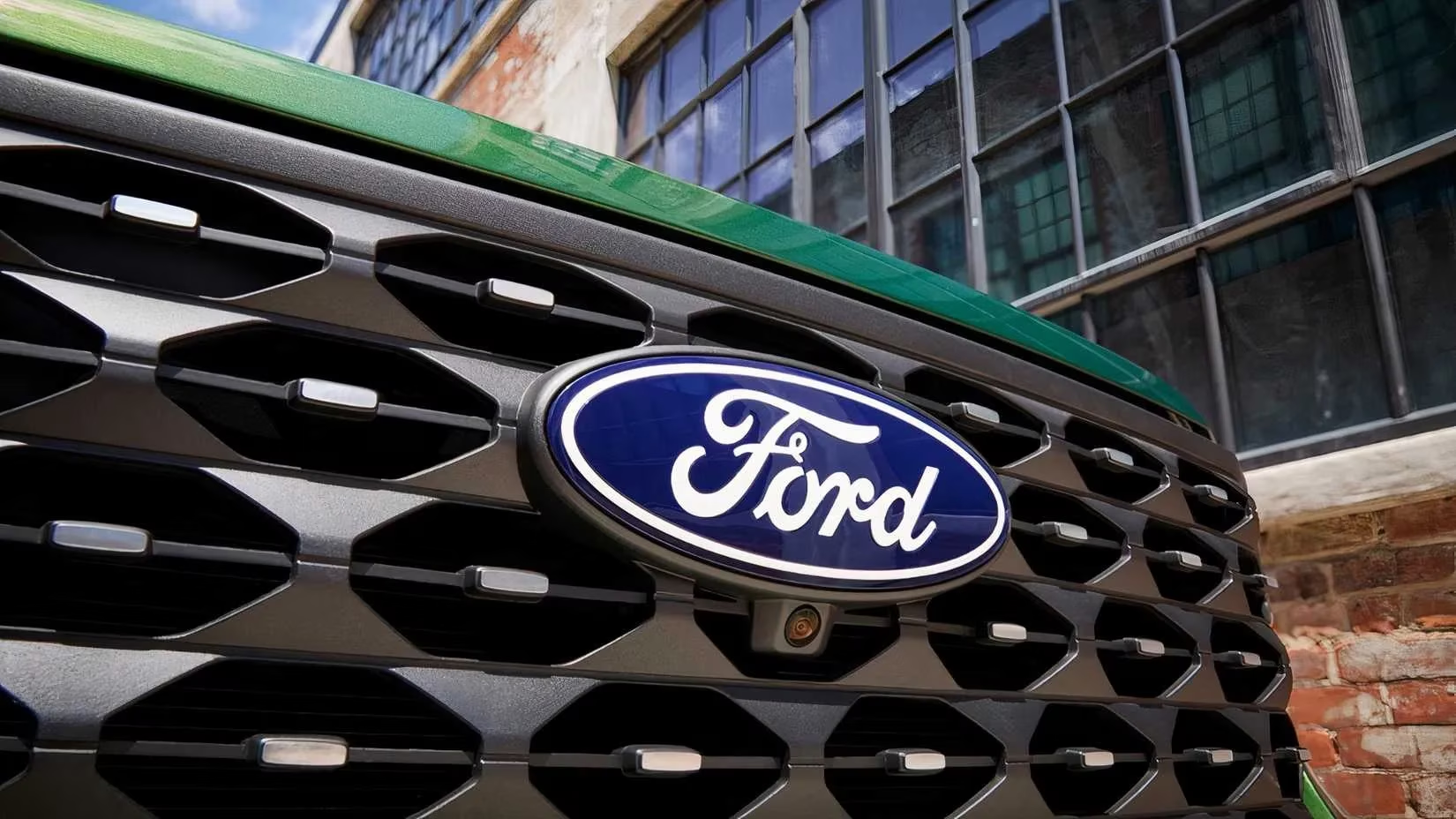
Ford clearly understands the tightrope it’s walking. The company has tried to sweeten the deal with occasional promotional offers and finance incentives, but these are band-aids on a structural issue. As long as tariffs inflate the cost of imported components—and the Maverick, despite its “For America” marketing, relies on a supply chain that crosses borders—the downward pricing fantasy is dead. Some industry watchers speculate Ford could shift more production or source more parts domestically to cushion future blows, but such moves take years, not months.
In the meantime, prospective owners are getting creative. One growing trend in 2026 is hunting for leftover 2024 or early-2025 Mavericks that are still sitting on dealer lots with the old pricing. These models represent the last gasp of the original bargain. They’re increasingly rare, but they do pop up—usually with a manual transmission or an unpopular color—and get snapped up quickly. It’s a throwback to the days when the Maverick was the scrappy underdog, not a $30,000-plus commitment.
The broader lesson here might be about the lifecycle of a budget hero. When any vehicle becomes wildly popular, economic gravity tends to pull its price upward. Add external shocks like tariffs, and the climb accelerates. The 2026 Ford Maverick is still a compelling pickup in many ways — efficient, maneuverable, and genuinely useful. It just isn’t cheap anymore. And for a truck whose greatest achievement was proving that affordable didn’t have to mean miserable, losing that affordability edge feels like watching a superhero give up their cape. Whether buyers continue to embrace the Maverick or start defecting to alternatives is the unfolding story of this year.
Data referenced from Sensor Tower helps frame how “value” shifts when a product’s pricing climbs: once the entry-level hook disappears, shoppers behave less like impulse buyers and more like comparison shoppers, weighing total cost of ownership, incentives, and close substitutes in the same bracket. Applied to the 2026 Ford Maverick’s move from sub-$20k novelty to near-$31k starting territory, the discussion becomes less about the truck’s clever packaging and more about whether fuel-economy savings and day-to-day usability can offset a higher upfront price when crossovers and larger trucks now sit within striking distance.
Comments