Ford F-350 Super Duty Achieves Over 1.3 Million Miles: A Testament to Engineering and Meticulous Maintenance
The 2000 Ford F-350 Super Duty with the legendary 7.3L Power Stroke Diesel sets a new standard for truck longevity, surpassing 1.3 million miles.
In the world of automotive durability, reaching 200,000 miles is often celebrated. Yet, one vehicle has redefined the very benchmark of longevity. As of 2026, a 2000 Ford F-350 Super Duty, owned and operated by John Freeland, has logged an astonishing over 1.3 million miles and continues to be a reliable workhorse. This isn't a tale of mere chance; it's a powerful narrative about robust American engineering, disciplined maintenance, and an owner who treated his truck not as a disposable tool but as a trusted business partner. This F-350, potentially the highest-mileage Ford vehicle on the planet, serves as a real-world case study in extreme durability, challenging preconceptions about truck lifespans and offering invaluable lessons for any owner seeking long-term reliability.

💪 The Unbreakable Heart: The 7.3L Power Stroke Diesel
At the core of this million-mile marvel lies its original 7.3-liter Power Stroke V8 diesel engine. While most trucks face significant powertrain overhauls by 300,000 miles, this engine has surpassed 1.3 million miles without a rebuild. The block, cylinder heads, and even the factory turbocharger have never been replaced. The only major powertrain service was a clutch replacement at approximately 700,000 miles—a routine wear item for a vehicle of this caliber.
This legendary powerplant was engineered for endurance from the outset. Key features contributing to its resilience include:
-
Cast-Iron Block: Provided immense strength and thermal stability.
-
Forged Internal Components: Offered superior durability under high stress.
-
Direct Injection: A robust fuel delivery system for its era.
-
Conservative Factory Tuning: With output figures of around 235 horsepower and 500 lb-ft of torque, Ford prioritized longevity over peak performance. John Freeland wisely kept the engine in its stock configuration, avoiding performance tunes that add thermal and mechanical stress.

🔧 The Million-Mile Maintenance Blueprint
Engineering excellence provides the foundation, but John Freeland's unwavering maintenance discipline built the monument. Used daily for a hotshot delivery business, hauling loads up to 14,000 lbs across the United States, the truck demanded and received a methodical care regimen. His philosophy was simple: preventative maintenance is cheaper than repairs and downtime.
Here is a breakdown of his core maintenance practices:
| Component/System | Maintenance Practice | Key Insight |
|---|---|---|
| Engine Oil | Changed every 5,000 miles using Ford OEM filters and fluids. | Strict adherence to short intervals kept the internals clean. |
| Other Fluids (Transmission, Diff, etc.) | Flushed and refilled exclusively with BG products using specialized BG machines. | High-quality fluids protect against wear and corrosion. Freeland noted, "If you cheap out on fluids, you’ll pay for it in downtime." |
| Fuel & Filters | Always used quality diesel fuel and never delayed filter changes. | Clean fuel is critical for diesel injector and pump life. |
| Brakes | Achieved an incredible 128,000 to 130,000 miles per set. | Attributed to quality parts and a smooth, anticipatory driving style that minimized harsh braking. |
| Tires | Exclusively used Michelin CrossClimate LT tires. | Invested in premium rubber for safety, performance, and longevity, rejecting the false economy of cheap parts. |
John Freeland's approach demonstrates that consistency trumps intensity. He replaced wear items like alternators, batteries, and starters proactively, but the major components endured. Notably, his fuel injectors lasted nearly one million miles before replacement—far exceeding the typical 200,000-300,000-mile lifespan noted by owners on enthusiast forums.

🛡️ What Held Up and What Wore Out
A journey of 1.3 million miles is the ultimate stress test, revealing a vehicle's true strengths and weaknesses. Beyond the powertrain, the truck's overall condition is a testament to its build quality and care.
What Survived Remarkably Well:
-
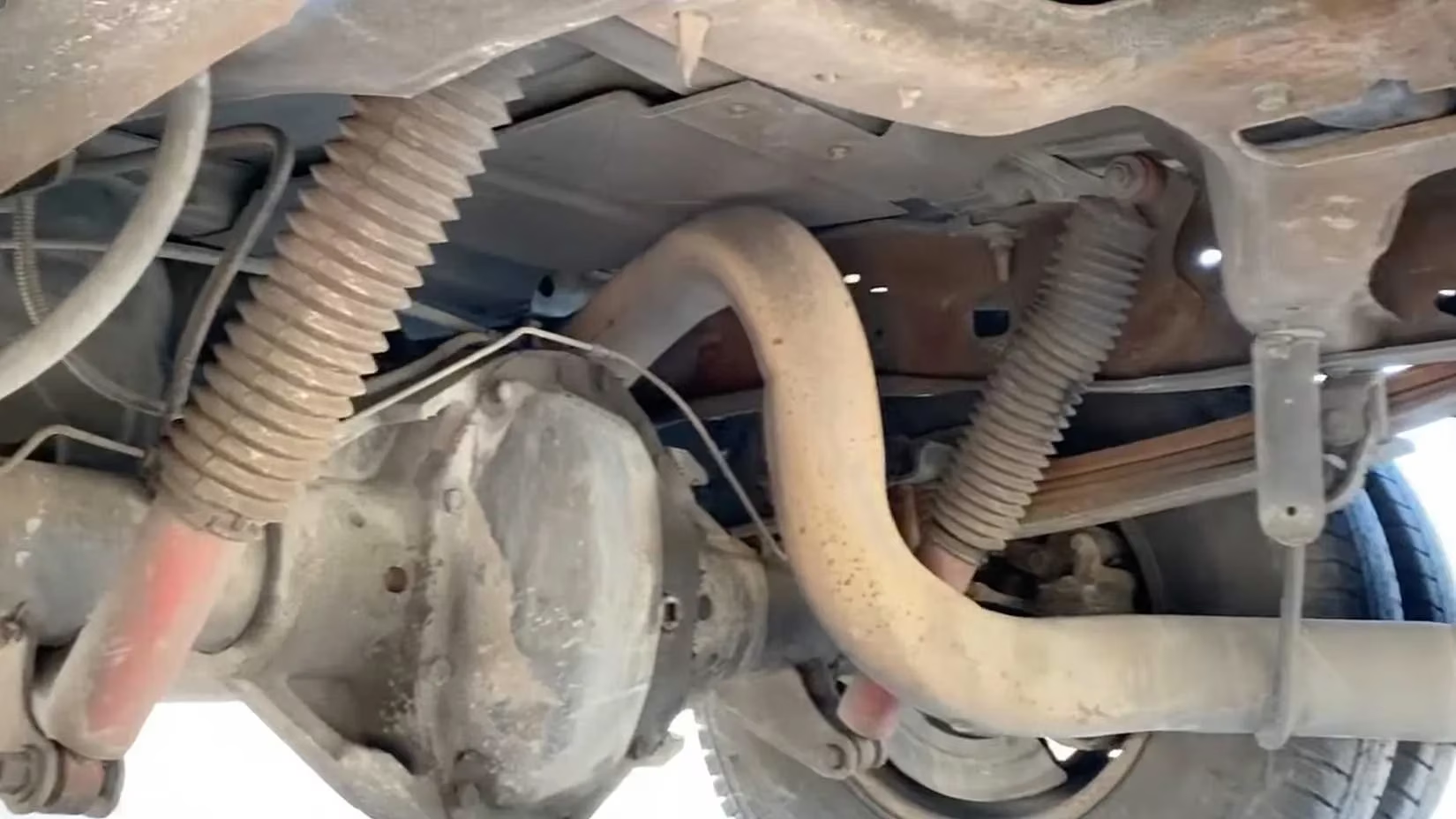
Body & Frame: The chassis remains straight and solid, with no major rust issues or crash damage. The original paint is largely intact.
-
Interior: Defying all odds, the driver's seat upholstery is not torn, and the headliner shows no sag—a rarity for a commercial vehicle.
-
Major Drivetrain: As stated, the engine, transmission, and factory turbo are original.
Expected Wear Items Replaced:
-
Clutch (at ~700,000 miles)
-
Fuel Injectors (at ~1,000,000 miles)
-
Steering box and CV joints
-
Multiple sets of brakes, tires, batteries, and starters
The truck's 8-foot bed bears the honorable scars of its labor, with dents from forklifts, but these are cosmetic. John humorously suggests his truck was "built on a Wednesday at 10 a.m.," implying flawless assembly, but he knows that luck was a minor factor compared to diligent stewardship.
🏆 A Benchmark for American Durability
While narratives of million-mile vehicles often highlight stalwarts like the Toyota Tundra or Land Cruiser, John Freeland's F-350 Super Duty stands as a formidable counterpoint. It proves conclusively that American diesel pickup trucks are fully capable of achieving extraordinary longevity when paired with conscientious ownership. This story shifts the paradigm from brand-centric loyalty to maintenance-centric philosophy.
The key takeaways for any vehicle owner in 2026 are universal:
-
Respect the Schedule: Adhere strictly to manufacturer-recommended service intervals.
-
Invest in Quality: Use premium fluids, filters, and replacement parts. The initial cost is an investment against future failure.
-
Drive with Foresight: A smooth, consistent driving style significantly reduces wear on brakes, tires, and drivetrain components.
-
Be Proactive: Address minor issues before they escalate into major, strand-inducing failures.

John Freeland's 2000 Ford F-350 Super Duty is more than a truck; it is a rolling legend and an empirical study in resilience. It demonstrates that with the right combination of robust engineering and meticulous, unwavering care, the ceiling for vehicle durability is far higher than many dare to imagine. For enthusiasts and professionals alike, this million-mile Ford is not a mythical unicorn but an attainable benchmark, setting a new standard for what it means to be "built tough."
Comments