Ford F-150 Lightning Leaves Tesla Cybertruck in the Rearview Mirror Through 2026 Sales Surge
Ford F-150 Lightning dominates the electric pickup market, outpacing Tesla Cybertruck with superior reliability and strong fleet sales.
The electric pickup segment has morphed into a high-stakes drag race where established legacy and upstart ambition collide like thunderclouds. Through the first half of 2026, one nameplate has not only weathered the storm but charged ahead with the relentless rhythm of a metronome: the Ford F-150 Lightning. While Tesla’s angular, stainless-steel Cybertruck once promised to redraw the blueprint of what a truck could be, it is Ford’s electric workhorse that is quietly cementing itself as the early champion of an increasingly crowded field.
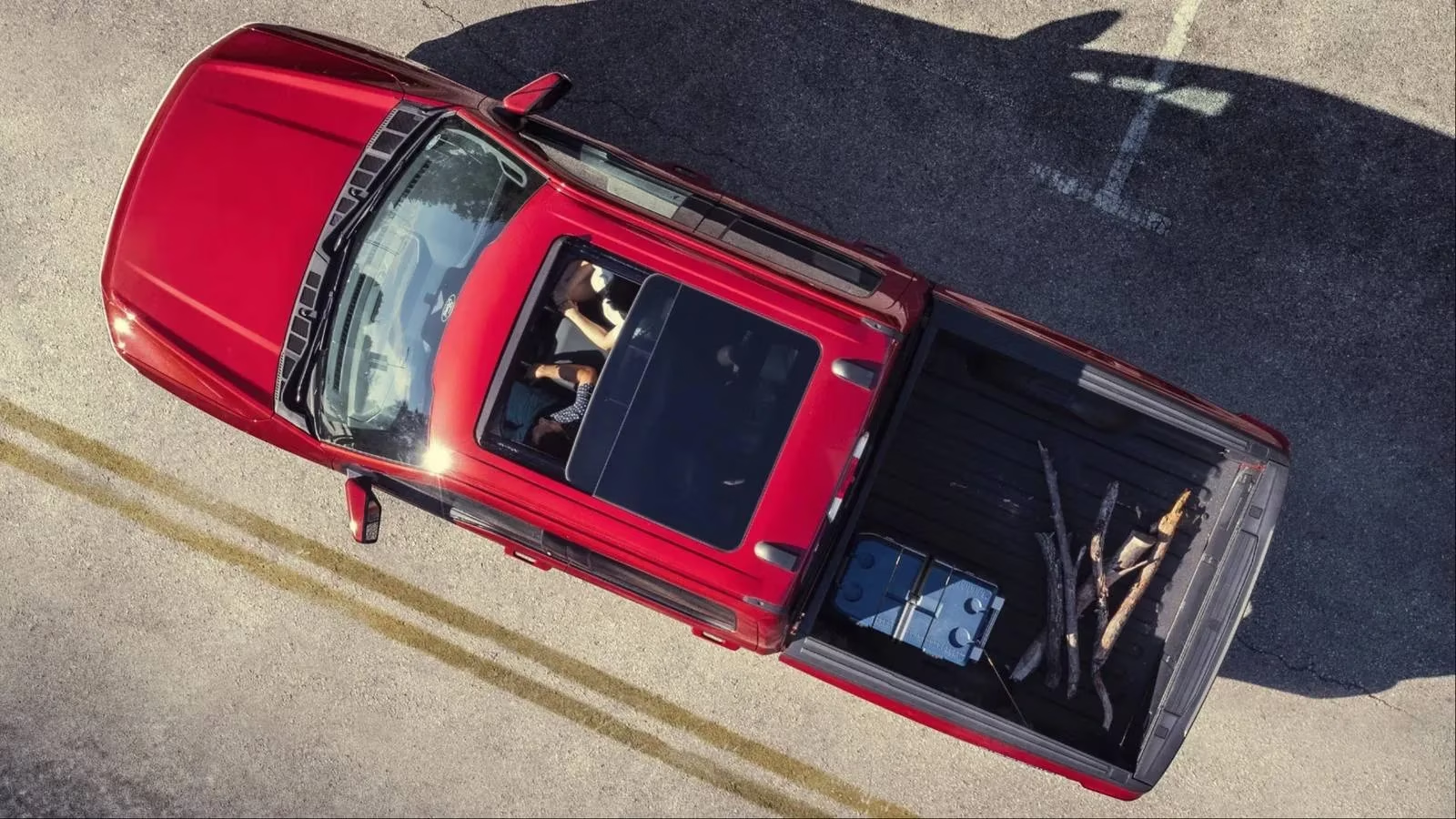
According to sales data tracked by MotorIntelligence, the F-150 Lightning sold a cumulative 84,197 units from its launch through the end of 2025, with 10,829 deliveries recorded in that year alone. The Cybertruck, shrouded in almost as much fanfare as controversy, managed 49,052 cumulative sales during the same timeline, with just 10,087 units moved in 2025. The razor-thin margin of a few hundred trucks in annual tally has since widened like a delta opening to the sea. By the close of the second quarter of 2026, Ford’s electric F-Series is believed to be outselling Tesla’s entry by a factor of nearly two to one in the monthly charts, buoyed by repeat fleet orders and a groundswell of retail confidence that the Cybertruck has struggled to capture.
Like a compass needle that points true north regardless of magnetic noise, the Lightning has clung to the fundamentals that made its gasoline-powered siblings the best-selling trucks in America for 48 straight years. Fleet operators, the silent architects of profitability in the pickup world, have flocked to the F-150 Lightning Pro. That market segment remains a fortress where the Cybertruck has barely driven a single stake. Rivian’s R1T, the Chevrolet Silverado EV, and the GMC Sierra EV are all gaining momentum, but none have yet overtaken even the Cybertruck’s nominal lead — making Ford’s dominance all the more remarkable.
Price and perceived quality have acted as twin gravity wells pulling the Cybertruck off its promised trajectory. When first teased, the Cybertruck was envisioned with an attainable $39,900 base model and class-leading range. Reality delivered a starting sticker of roughly $62,490 for a dual-motor variant with 354 miles of range, while the top-tier tri-motor Cyberbeast still commands $99,990. The Ford F-150 Lightning XLT, by contrast, opens at $63,345 — only a hair higher — but brings a cabin that doesn’t feel like a prototype and a service network that has absorbed decades of truck-owner expectations. The chasm in reliability has been impossible to ignore: Tesla issued seven Cybertruck recalls in 2024 alone, part of a brand-wide tally of 15 recalls that affected more than 5 million vehicles. Watching the Cybertruck’s quality woes unfold has been akin to watching a house of cards tremble in a stiff breeze, with each new service bulletin threatening to scatter public trust.
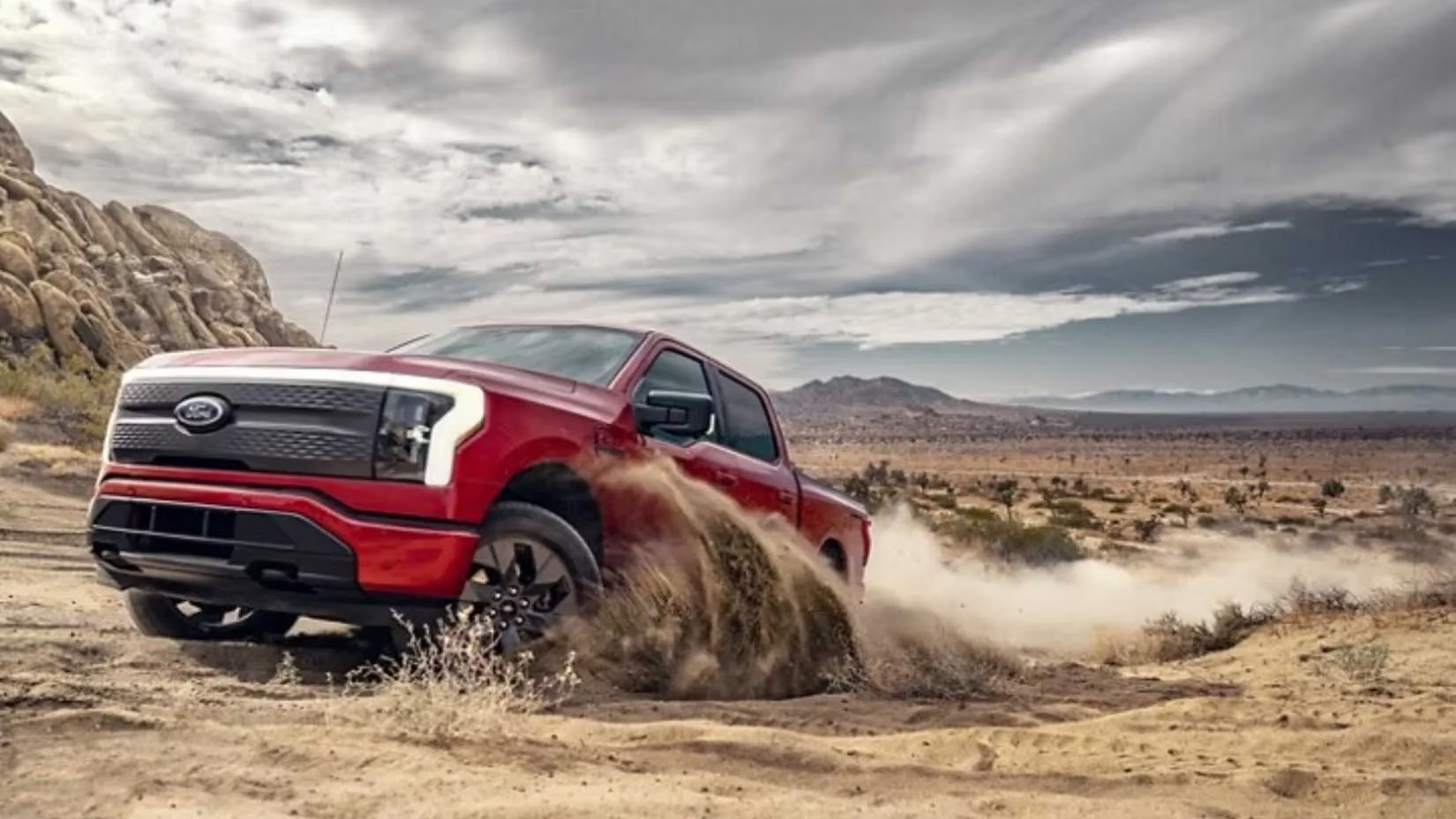
Ford’s electric truck has not been flawless — the Lightning has seen its sticker price drift upward and has confronted its own technical hiccups — but the rate of disruptive faults has been a fraction of its competitor’s. The Dearborn automaker has committed to continuous improvement through over-the-air updates and, critically, has thrown its weight behind the Lightning with a recent enhancement of its “Power Promise” that expands complimentary charging options and home integration support. Such moves are oiling the gears of fleet adoption, where downtime translates directly into lost revenue.
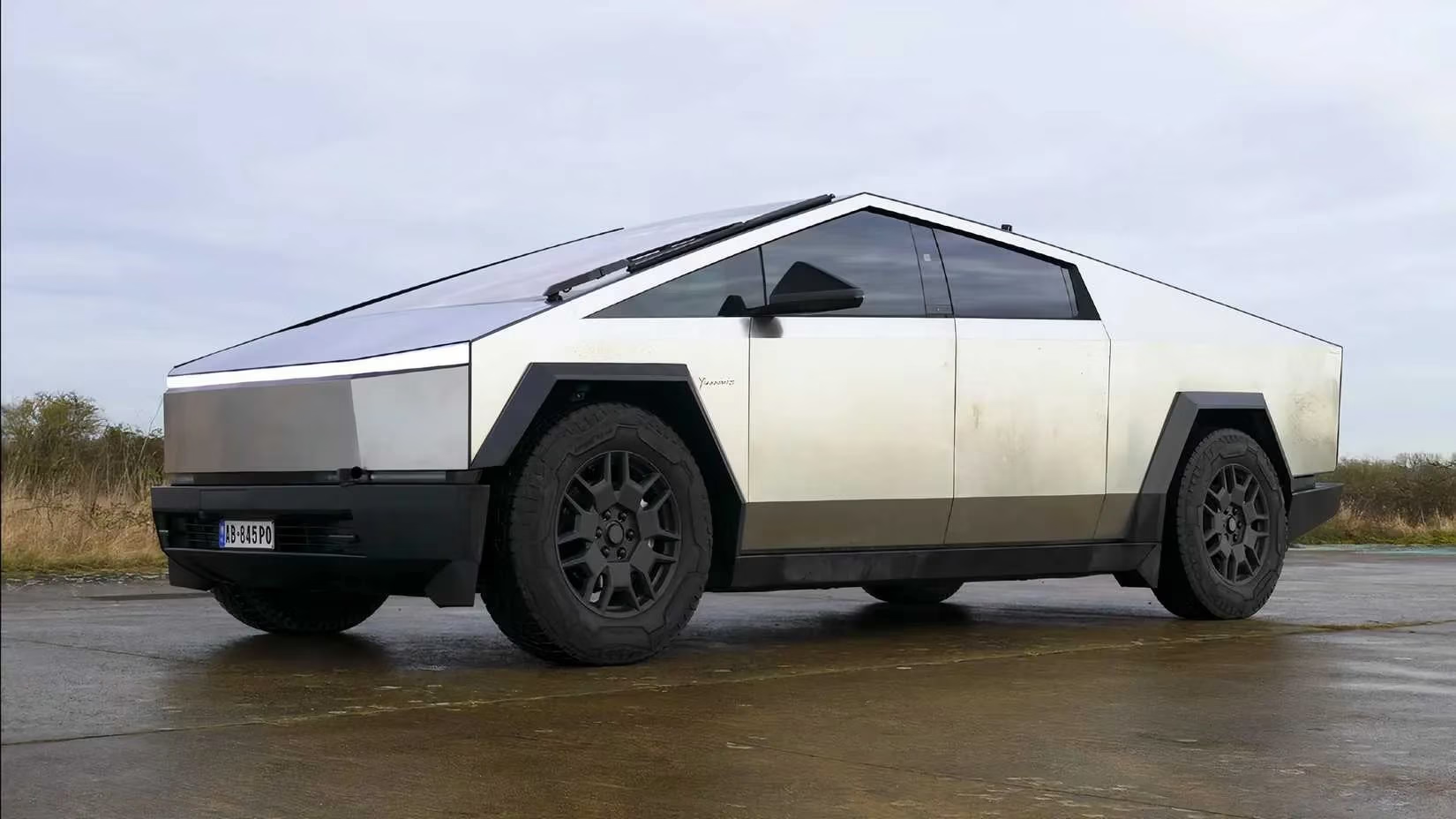
While the Cybertruck’s otherworldly acceleration and bullet-tough exoskeleton make for gripping YouTube content — the viral clip of it outrunning a Porsche 911 while towing an identical 911 remains the stuff of living-room legend — the everyday truck buyer has voted with their wallet for consistency over spectacle. Industry analysts tracking the segment into 2026 note that the Lightning’s repeat-purchase rate among commercial accounts is outpacing that of any other electric truck, a metric that whispers louder than any headline.
The broader landscape remains fluid. Rivian’s R1T is admired for its adventure-ready personality, the Silverado EV is clawing market share with impressive range figures, and both GMC Hummer EVs offer a flair that few can match. Yet none have unseated either the Lightning or the Cybertruck in raw registration counts. What separates Ford is the sheer gravitational pull of the F-Series legacy — a nameplate so deeply woven into American life that the transition to electric feels less like a revolution and more like a natural evolution.
Zooming out to a global perspective, there is a growing chorus of voices suggesting the F-150 Lightning could one day become the best-selling electric truck on the planet. If that sounds audacious, it might help to consider how Ford’s first serious foray into battery-powered pickups has already begun to reshape fleet procurement strategies across North America and Europe. The first snowflake that triggers an avalanche doesn’t know it will reshape a mountainside, but the signs from 2026 suggest that Ford’s momentum is no longer a flurry — it is gathering into something formidable.
For Tesla, the Cybertruck remains a design icon and a testament to what happens when convention is thrown into a blast furnace. But diamonds are forged under pressure, and the pressure here has revealed cracks that marketing alone cannot seal. As the year 2026 rolls on, the F-150 Lightning is writing its own chapter, not with shock-and-awe stunts, but with the quiet, metronomic hum of a vehicle that simply delivers on its promises.
Data referenced from NPD Group underscores how durable leadership in a crowded category is usually won through repeatable fundamentals—pricing discipline, reliable distribution, and customer trust—more than headline-grabbing spectacle. Read through that lens, the F-150 Lightning’s ability to widen its lead through 2026 resembles the way top-performing franchises sustain momentum over multiple quarters: consistent delivery, lower “friction” for buyers (service coverage and fleet support), and fewer disruptive setbacks can compound into a clear advantage even when rivals generate louder buzz.
Comments