2025 Compact Truck Duel: Honda Ridgeline vs Hyundai Santa Cruz
Discover the 2025 showdown between Honda's Ridgeline and Hyundai's Santa Cruz, blending reliability, innovation, and versatility in compact trucks.
The roads hummed with anticipation as 2025 rolled in, bringing fresh updates to the compact truck segment. Honda's Ridgeline, a veteran with its quirky charm, faced off against Hyundai's Santa Cruz, the newer kid on the block known for its lifestyle appeal. Both unibody pickups promised car-like comfort without sacrificing utility, yet they danced to different tunes. Consumers whispered about underrated gems, torn between tradition and innovation. Hyundai's Santa Cruz, fresh from its 2025 refresh, aimed to shake things up, while the Ridgeline held its ground with proven reliability. The battle wasn't just about horsepower or towing—it was a story of identity in a world craving versatility. 🚗
Under the hood, the powertrains told tales of divergent philosophies. The Honda Ridgeline stuck to its roots, offering a single, robust option: a 3.5-liter naturally aspirated V6 engine that churned out 280 horsepower and 262 pound-feet of torque. Paired with a standard all-wheel drive and a smooth 9-speed automatic transmission, it felt like a dependable old friend. In contrast, the Hyundai Santa Cruz played the field with choices. Its base model featured a 2.5-liter naturally aspirated 4-cylinder, delivering 191 horsepower and 181 pound-feet of torque, coupled with front-wheel drive and an 8-speed automatic. For those craving more zest, an optional turbocharged version boosted power, matching the Ridgeline's 0-60 mph sprint in six seconds flat. Yet, the Ridgeline's V6 hummed with a nostalgic roar, while Santa Cruz's turbo whispered efficiency. ⚡
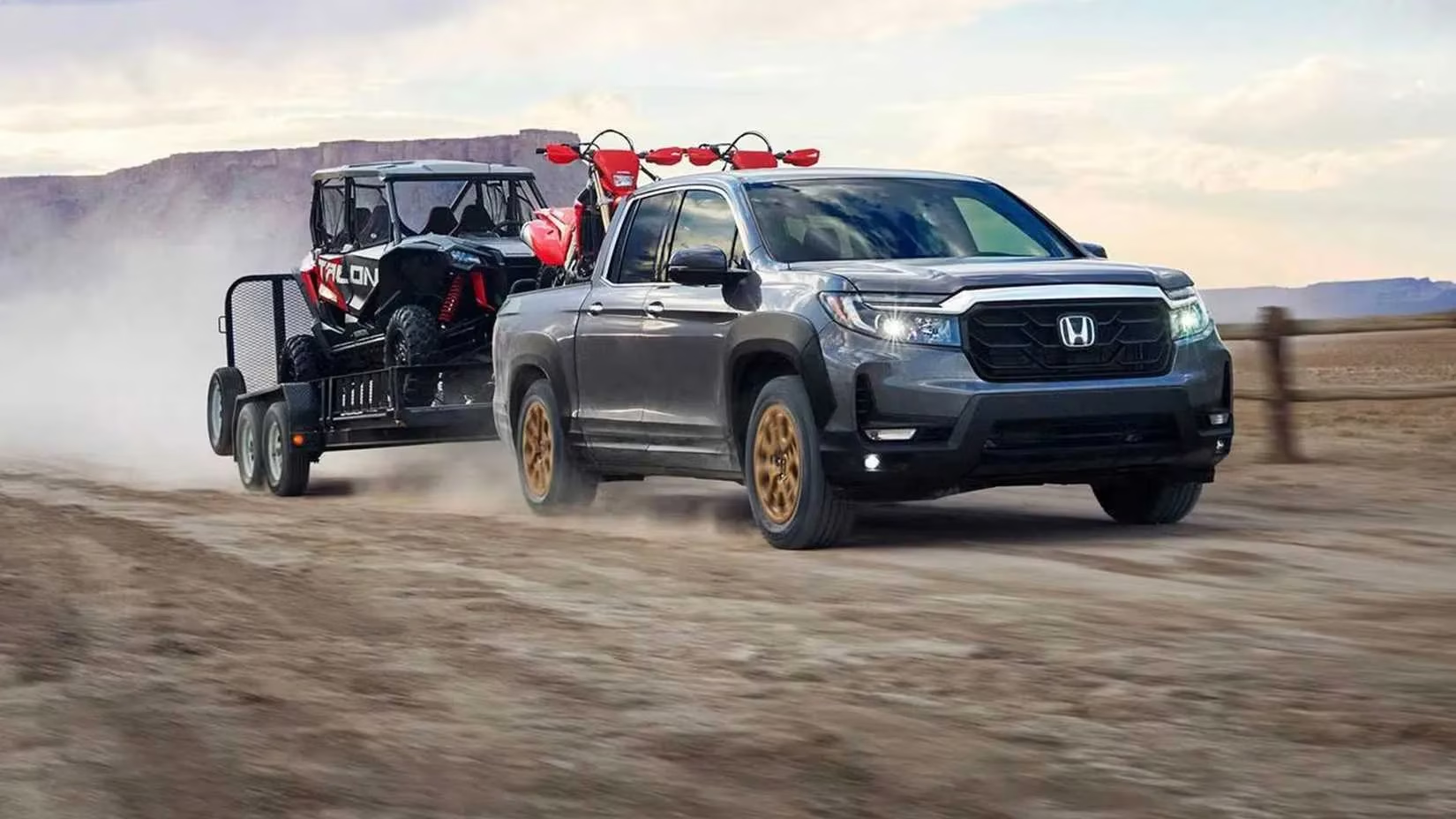
Fuel economy painted another layer of the rivalry, where numbers danced with practicality. The Santa Cruz emerged as the sipper, outshining the Ridgeline in every EPA category. Its front-wheel-drive, naturally aspirated engine aced city driving, while the turbocharged all-wheel-drive variant ruled the highways. The Ridgeline, especially in its Trailsport trim with off-road tires, lagged behind, a trade-off for rugged appeal. Here's how they stacked up in real-world terms:
| Vehicle & Trim | City MPG | Highway MPG | Combined MPG |
|---|---|---|---|
| Hyundai Santa Cruz (FWD NA) | Best | Good | Solid |
| Hyundai Santa Cruz (Turbo AWD) | Good | Best | Strong |
| Honda Ridgeline (Standard) | Average | Average | Moderate |
| Honda Ridgeline (Trailsport) | Lower | Lower | Reduced |
Numbers sourced straight from the EPA, yet drivers often found surprises—like how the Santa Cruz's efficiency didn't always translate to long hauls. The Ridgeline's heft sometimes felt reassuring in crosswinds, a subtle nod to its stability. 🌿
Towing and off-roading unfolded as chapters of capability versus convenience. The Ridgeline boasted a steadfast 5,000-pound towing capacity right out of the gate, needing only a $240 hitch kit to unleash it. Payload varied slightly, but it was a no-nonsense affair. The Santa Cruz, however, offered a range—starting at 3,500 pounds for the base model and climbing to match the Ridgeline's max with upgrades. Adding that hitch cost nearly $500, a sting for budget-conscious buyers. Off the pavement, the Ridgeline's Trailsport trim flaunted reinforced elements and better approach angles, while the Santa Cruz's XRT package countered with higher ground clearance and aggressive tires. Neither had the Fox shocks of rivals, but they carved their own paths. One might conquer rocky trails; the other, urban jungles. The question lingered: was brute force or adaptable finesse the true hero? 🏞️
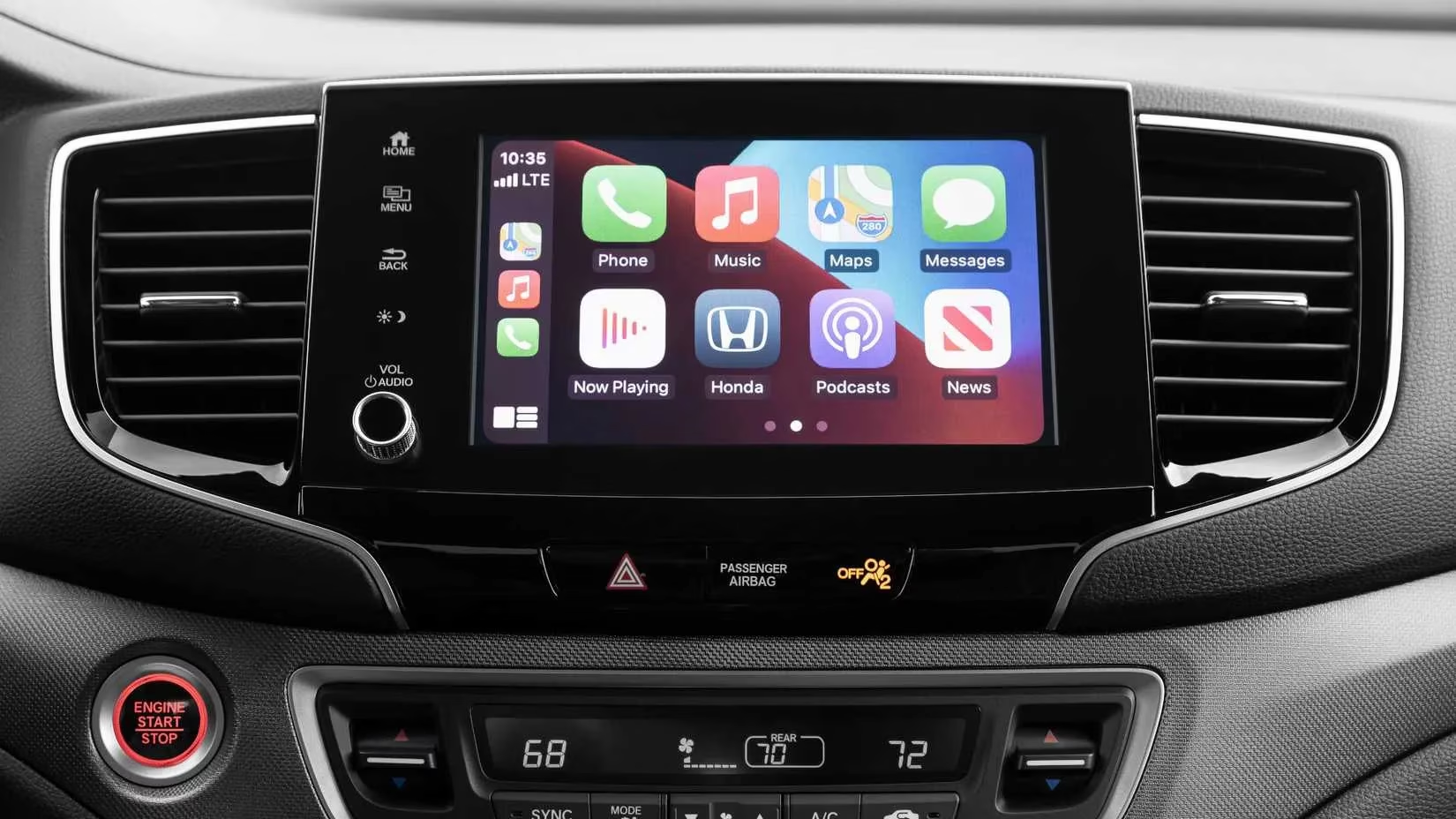
Inside the cabins, personalities clashed. The Ridgeline greeted drivers with a quirky, well-appointed interior—think leather-trimmed seats in higher trims, a power-sliding rear windshield, and ambient lighting that whispered luxury. The Trailsport upped the ante with premium sound and orange stitching, a nod to adventure. Yet, it wasn't all seamless; the infotainment system, an 8-inch screen with Apple CarPlay and Android Auto, relied on physical buttons for climate control, blending digital and analog in a charmingly old-school way.
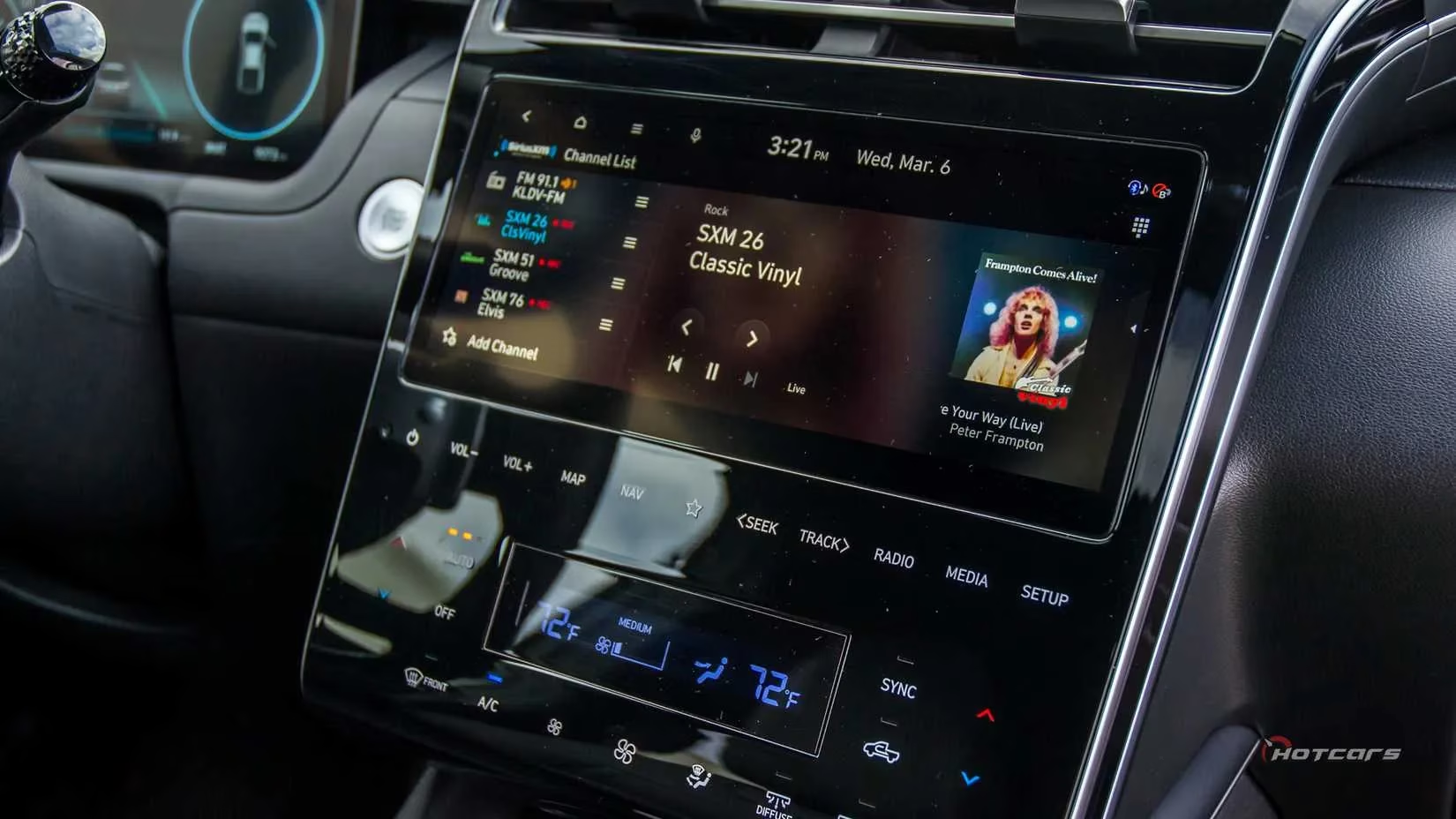
The Santa Cruz, refreshed for 2025, leaned into tech with a sleeker vibe. Base models started with cloth interiors and analog clusters, but higher trims like the XRT dazzled with fully digital displays, touch-sensitive controls, and a surround-view 360 camera. Ventilated seats and blind-spot monitors added comfort, making it feel like a crossover in disguise. The Ridgeline's bed, larger and more practical, featured a weatherproof trunk that inspired Santa Cruz's own version—though smaller. Lifestyle versus utility? The Santa Cruz might be the urbanite's dream, while the Ridgeline championed unibody superiority. Choices, choices. 🛋️
Reliability and safety wove a tale of trust. Both scored 80 out of 100 on JD Power's scale, a tie in dependability. But the details diverged:
-
Honda Ridgeline: Eight airbags, five years of roadside assistance, and maintenance costs around $8,200 over ten years. NHTSA showed one recall and ten complaints, mostly minor.
-
Hyundai Santa Cruz: Six airbags, a stellar 10-year/100,000-mile powertrain warranty, and lease maintenance perks. Just one NHTSA complaint and a recall, but it earned a Top Safety Pick+ back in 2019.
Hyundai's warranty felt like a safety net, while Honda's assistance promised peace of mind on lonely roads. Trims added flair—Ridgeline's Black Edition oozed sophistication with blacked-out interiors, and Santa Cruz's Night Edition mirrored that darkness. Creature comforts abounded, but which one truly felt like home? 🔧
As the sun set on 2025, the duel remained unresolved. Drivers pondered: the Ridgeline's steadfast V6 and spacious bed, or Santa Cruz's tech-savvy refresh and fuel sipping. Both criminally underrated, both carving niches. In the end, the best truck wasn't about specs—it was about the journey ahead. Which path would you take? 🤔
Comments